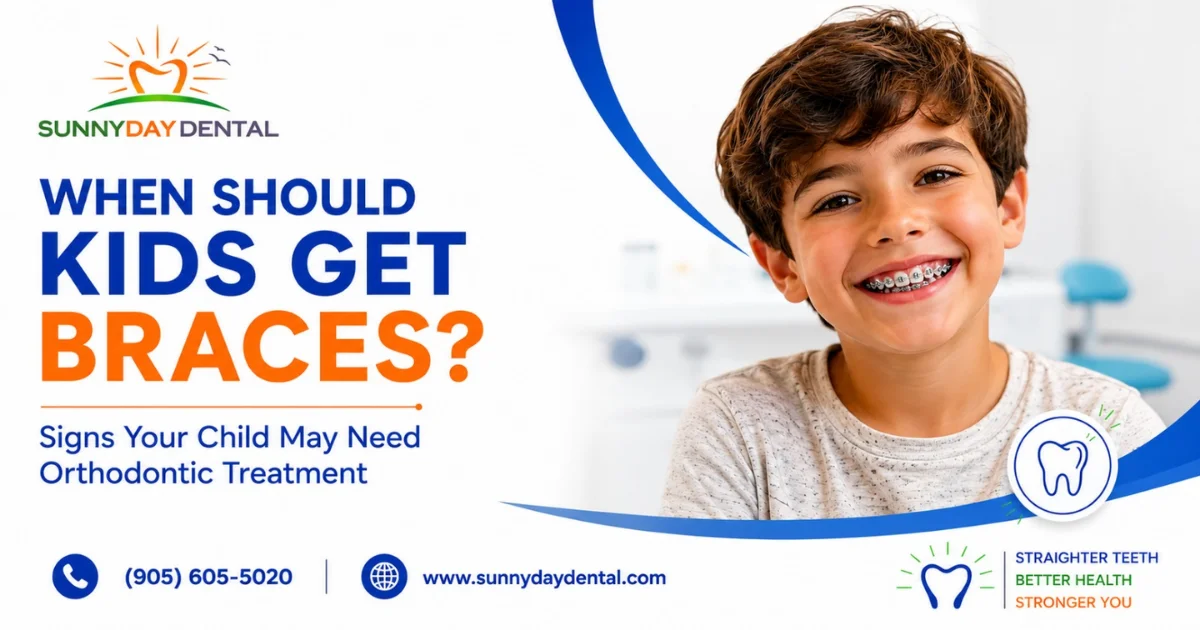
Most children benefit from a first orthodontic check by around age 7, even though kids braces are often fitted between ages 10 and 14 as adult teeth come in. Watch for crowding, an uneven bite, or early or late tooth loss. An assessment confirms whether and when treatment helps.
If you have looked at your child’s smile and wondered whether braces are coming, you are asking the right question at the right time. When it comes to kids braces, timing makes a real difference. This guide covers the ideal age, the signs to watch for, and how early pediatric orthodontics can sometimes make later treatment simpler. For the full picture, see our guide to orthodontic treatment in Woodbridge.
What Age Should Kids Get Braces?
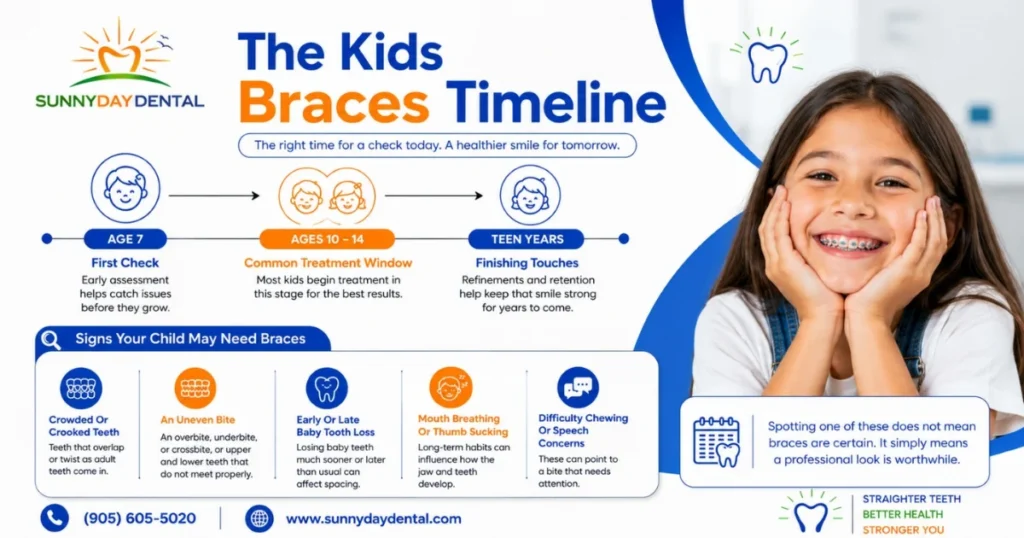
There is no single magic age, but there is a helpful milestone. Orthodontics generally suggest a first check by around age 7. At that point, enough adult teeth have arrived to spot developing issues, even though active braces for children often begins between ages 10 and 14. Catching things early does not always mean starting early. Sometimes the best plan is simply to watch and wait.
Signs Your Child May Need Braces
Every child is different, but a few common signs suggest it is worth booking an assessment:
- Crowded Or Crooked Teeth: teeth that overlap or twist as adult teeth come in.
- An Uneven Bite: an overbite, underbite, or crossbite, or upper and lower teeth that do not meet properly.
- Early Or Late Baby Tooth Loss: losing baby teeth much sooner or later than usual can affect spacing.
- Mouth Breathing Or Thumb Sucking: long-term habits can influence how the jaw and teeth develop.
- Difficulty Chewing Or Speech Concerns: these can point to a bite that needs attention.
Spotting one of these does not mean braces are certain. It simply means a professional look is worthwhile.
Early Treatment vs Waiting
Some children benefit from early, or interceptive, treatment while the jaw is still growing. This first phase can guide jaw development, create space, and sometimes reduce the complexity of later care. Many children, though, do best when treatment waits until more adult teeth are in. A good orthodontics recommends early kids orthodontic treatment only when it genuinely helps, not by default.
Expert Insight
Orthodontic associations recommend a first orthodontic check by around age 7. Spotting an issue early does not always mean treating early. It simply lets the orthodontics plan the best timing for your child.
Types and Cost of Children’s Braces
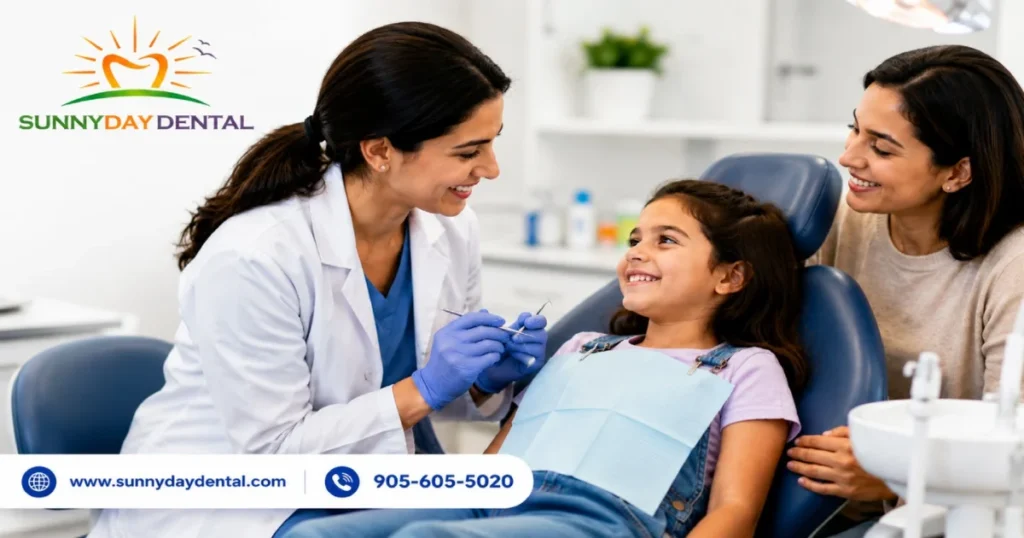
Children can be treated with metal or ceramic pediatric braces, and older kids may suit clear aligners. Our guide to the types of braces explains each. On kids braces cost, children’s treatment often ranges from about $2,500 to $7,000, with early interceptive care sometimes lower. Our braces cost guide has the details, and as part of pediatric dental care in Woodbridge, we will always talk through payment options with you.
Book a Children’s Orthodontic Check in Woodbridge
Wondering if it is time for kids braces? A friendly assessment gives you clear answers and a plan, if one is even needed yet. Book your consultation today.
Sunny Day Dental, Woodbridge. Call (905) 605-5020, visit sunnydaydental.com, or come in at 8290 Highway 27, Unit 4, Woodbridge, ON L4H 0S1. Evening and Saturday appointments available. CDCP accepted.
FAQs About Kids Braces
Q1. At What Age Should Kids Get Braces?
Most children have a first orthodontic check by around age 7, though braces are often fitted between ages 10 and 14 as adult teeth come in. The early check spots developing issues. Whether treatment starts early or later depends on your child’s individual needs.
Q2. Why Is the First Orthodontic Visit at Age 7?
By around age 7, enough adult teeth have arrived for an orthodontics to see how the bite and jaw are developing. This makes it possible to catch issues early and plan the right timing, even if treatment itself is still a few years away.
Q3. What Are the Signs My Child Needs Braces?
Common signs include crowded or crooked teeth, an overbite or underbite, early or late loss of baby teeth, difficulty chewing, and long-term thumb sucking or mouth breathing. None guarantees braces are needed. An assessment confirms whether and when treatment would help.
Q4. What Is Early or Phase 1 Treatment?
Early, or interceptive, treatment happens while a child’s jaw is still growing. It can guide jaw development, create space, and sometimes simplify later care. It is recommended only when it genuinely helps. Many children do just as well waiting until more adult teeth arrive.
Q5. How Much Do Kids Braces Cost?
Children’s braces often range from about $2,500 to $7,000, depending on the type and complexity, with early interceptive care sometimes lower. These are general ranges, not quotes. Most practices offer payment plans, and some private insurance and provincial programs may help eligible families.
Q6. Can Baby Teeth Affect the Need for Braces?
Yes. Baby teeth hold space for adult teeth, so losing them too early or too late can affect how adult teeth come in. Habits like thumb sucking can also influence development. An early check helps spot these patterns before they become bigger issues.