
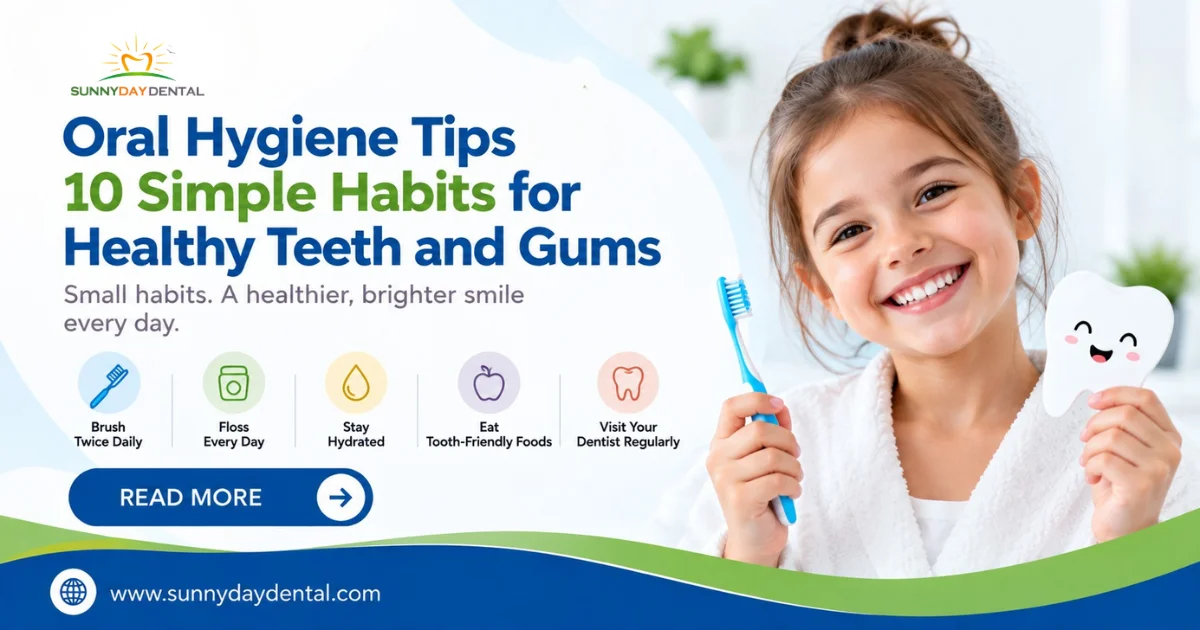
The best oral hygiene tips are simple: brush twice a day, floss daily, use fluoride, limit sugar, stay hydrated, and see your dentist regularly. A consistent daily oral hygiene routine prevents cavities and gum disease and keeps your smile healthy for life.
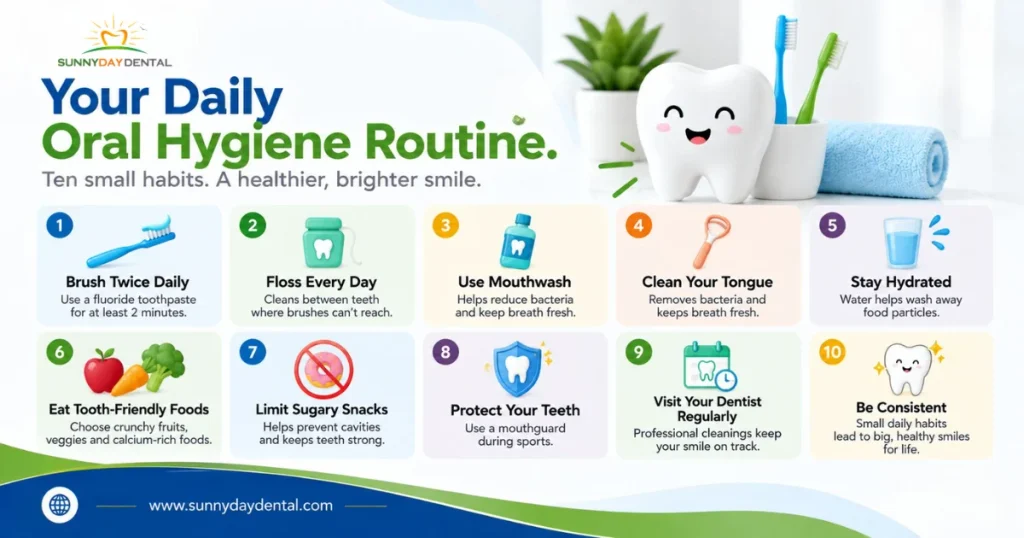
Great oral health is built on small, daily habits, not big gestures. These ten best oral hygiene tips are simple to follow and make a real difference. They are practical oral health tips you can build into any day. Pair them with regular visits, and your smile is set. For more, see our guide to dental cleaning in Woodbridge.
1. Brush Twice a Day for Two Minutes
Brush morning and night with a soft brush, spending a full two minutes each time. This is the single most important habit for healthy teeth.
2. Floss Once a Day
Flossing cleans the surfaces your brush cannot reach, between the teeth and just under the gumline, where decay and gum disease often start.
3. Use Fluoride Toothpaste
Fluoride strengthens your enamel and helps prevent cavities. It is one of the simplest ways to protect your teeth every day.
4. Do Not Brush Too Hard
Scrubbing can wear enamel and irritate gums. Use gentle, circular motions and let the bristles do the work.
5. Clean Your Tongue
Bacteria collect on your tongue and contribute to bad breath. A quick brush or a tongue scraper helps keep your mouth fresh.
Expert Insight
Two minutes is the target, but studies show most people brush for only about 45 seconds. Timing yourself, or using an electric brush with a built-in timer, is one of the easiest ways to improve your daily routine.
6. Limit Sugary and Acidic Foods
Sugar feeds the bacteria that cause cavities, and acid softens enamel. Enjoy them in moderation, and rinse with water afterward.
7. Stay Hydrated
Water rinses away food and bacteria and supports healthy saliva, your mouth’s natural defence. It is a simple win for your teeth.
8. Replace Your Toothbrush Regularly
Swap your brush or brush head every three to four months, or sooner if the bristles are frayed. A worn brush cleans poorly.
9. Never Skip Your Night-Time Routine
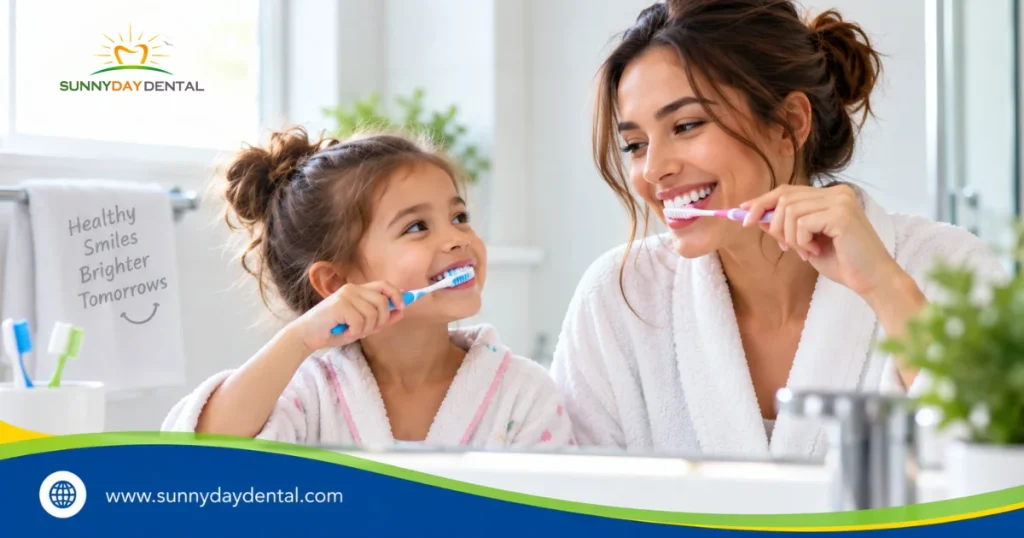
Brushing before bed removes the day’s buildup and protects your teeth overnight, when saliva flow drops. It is the most important brush of the day.
10. See Your Dentist Regularly
Home care and professional care work together. Even a perfect routine cannot remove tartar, so knowing how to maintain good oral hygiene includes a regular cleaning. Book a professional cleaning every six months to complete your care.
Complete Your Routine With a Cleaning
Good habits plus a regular cleaning keep your smile healthy for life. We are here to help you stay on track. Book your cleaning today.
Sunny Day Dental, Woodbridge. Call (905) 605-5020, visit sunnydaydental.com, or come in at 8290 Highway 27, Unit 4, Woodbridge, ON L4H 0S1. Evening and Saturday appointments available. CDCP accepted.
FAQs About Oral Hygiene Tips
Q1. What Are the Best Oral Hygiene Habits?
Brush twice a day for two minutes, floss once a day, use fluoride toothpaste, limit sugar and acid, stay hydrated, and see your dentist regularly. These simple daily habits prevent cavities and gum disease and keep your teeth and gums healthy for life.
Q2. How Long Should I Brush My Teeth?
Aim for a full two minutes, twice a day. Most people brush for much less, so timing yourself helps. An electric toothbrush with a built-in timer makes it easy to reach two minutes and clean every surface thoroughly.
Q3. Is Flossing Really Necessary?
Yes. Brushing cleans only about three of the five surfaces of each tooth. Flossing reaches between the teeth and just under the gumline, where decay and gum disease commonly begin. Daily flossing is one of the most valuable habits for healthy gums.
Q4. Does Diet Affect My Oral Health?
Very much. Sugar feeds cavity-causing bacteria and acid softens enamel, so frequent sugary or acidic snacks and drinks raise your risk. Enjoying them in moderation, rinsing with water, and not sipping them all day protects your teeth.
Q5. How Often Should I Replace My Toothbrush?
Every three to four months, or sooner if the bristles look frayed. A worn brush cleans poorly and can irritate gums. If you have been unwell, replacing your brush afterward is also a good idea.
Q6. Can Good Home Care Replace Professional Cleanings?
No. Even excellent home care cannot remove tartar once plaque hardens, and it cannot reach every spot below the gumline. Home care and regular professional cleanings work together to keep your mouth healthy. Both are essential.