
Dental crowns are custom caps that cover and protect a damaged, weak, or root-canalled tooth, restoring its strength and natural look. In Woodbridge, a crown usually costs about $900 to $2,000 depending on the material, and with good care it can last 10 to 15 years or more. For dental crowns in Woodbridge, Sunny Day Dental can help.
A damaged tooth does not have to mean a lost tooth. More often than not, it means a crown.
A crown is one of the most common and reliable ways to rescue a tooth that is cracked, heavily decayed, or worn down. If your dentist has mentioned one, or you are weighing your options, this guide covers everything in plain terms: what dental crowns are, the types, the procedure, recovery, cost, and the real benefits. For personalised care with dental crowns in Woodbridge, our team is here whenever you are ready.
What Are Dental Crowns?
A crown, sometimes called a cap, is a custom-made cover that fits over a whole tooth. It restores the tooth’s shape, size, strength, and appearance, all the way down to the gumline. Think of it as a protective helmet for a tooth that can no longer stand on its own.
Crowns are used after a large filling, a crack, heavy wear, or a root canal, and they can also improve a badly shaped or discoloured tooth. A crown is a fixed, long-lasting form of dental crown treatment that looks and works like a natural tooth.
The Benefits of Dental Crowns
The dental crown benefits go well beyond looks. A crown protects and extends the life of a tooth you might otherwise lose.
- Restores Strength: A crown lets you bite and chew normally again.
- Protects a Weak Tooth: It holds a cracked or fragile tooth together and guards against fracture.
- Saves a Root-Canalled Tooth: It seals and strengthens a tooth after root canal treatment.
- Looks Natural: Modern crowns are matched to the shape and shade of your own teeth.
- Lasts for Years: With good care, a crown is a durable, long-term solution.
- Improves a Smile: A crown can restore a misshapen or deeply discoloured tooth.
Types of Dental Crowns
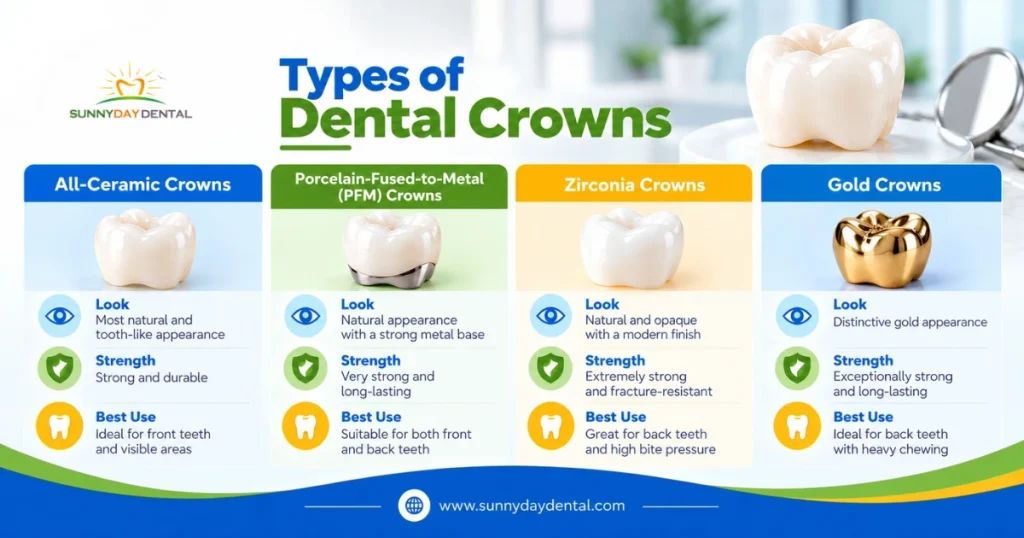
There are several types of dental crowns, and the right one depends on the tooth, your bite, and your budget. Here is a quick comparison. Our full guide to crown materials goes deeper.
| Material | Look | Strength | Best For |
| All-porcelain or ceramic | Most natural | Good | Front teeth |
| Porcelain fused to metal | Natural, slight edge risk | Very strong | Front or back teeth |
| Zirconia | Natural, no grey line | Extremely strong | Any tooth, grinders |
| Metal or gold | Metallic | Longest lasting | Back molars |
Expert Insight
Zirconia has become the most common crown material in Ontario practices. It pairs the strength of metal with a natural, tooth-coloured look, and it avoids the thin grey line at the gum that older porcelain-fused-to-metal crowns can develop over time.
The Dental Crown Procedure: Step by Step
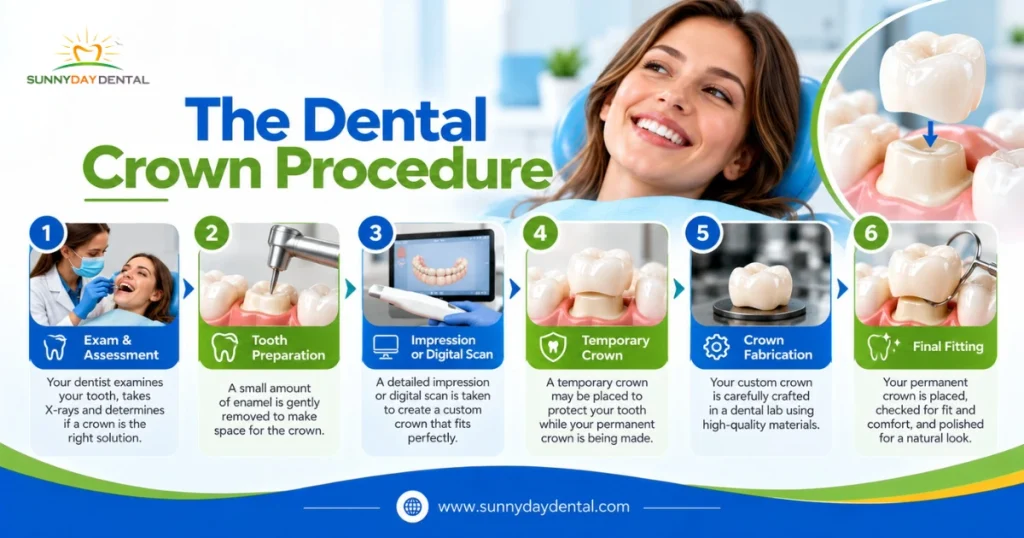
Knowing what to expect takes the worry out of it. A traditional dental crown procedure usually takes two visits, though some offices offer same-day crowns milled on site.
- Step 1, Exam and Planning: We check the tooth, take X-rays, and confirm a crown is the right fix.
- Step 2, Tooth Preparation: Under local anesthetic, we gently shape the tooth and remove any decay.
- Step 3, Impression or Scan: We take a mould or a digital scan and match the shade to your teeth.
- Step 4, Temporary Crown: A temporary crown protects the tooth while your custom one is made.
- Step 5, Fabrication: A dental lab crafts your permanent crown, usually over a week or two.
- Step 6, Fitting: At the second visit, we check the fit and bite, then cement the crown in place.
The visit is done under local anesthetic, so you feel pressure rather than pain. Many patients say it is easier than they expected.
Dental Crown Recovery and Aftercare

There is very little downtime. Dental crown recovery is usually quick and straightforward, with only mild sensitivity for a short while.
- With Your Temporary Crown: Avoid very sticky or hard foods, and chew on the other side.
- Mild Sensitivity: Some sensitivity to hot or cold is normal for a few days and settles.
- After the Permanent Crown: You can usually eat normally once any numbness wears off.
- Ongoing Dental Crown Aftercare: Brush twice a day, floss around the crown daily, and avoid chewing ice or hard objects.
- Wear a Night Guard: If you grind your teeth, this protects your crown while you sleep.
Good dental crown aftercare is the single biggest factor in how long your crown lasts.
How Much Do Dental Crowns Cost in Woodbridge?
The dental crown cost depends on the material and whether the tooth needs extra work first, such as a core or a root canal. In Ontario, fees are guided by the Ontario Dental Association (ODA) Suggested Fee Guide. As a general guide, a single crown runs about $900 to $2,000, and most patients pay $1,000 to $1,600. These are general ranges, not quotes. Our full cost guide has the detail.
| Crown Material | Typical Cost (2026) |
| Porcelain fused to metal | $1,000 to $1,800 |
| All-porcelain or ceramic | $1,100 to $2,200 |
| Zirconia | $1,300 to $2,200 |
Most private and employer plans treat a crown as a major restorative service and cover about 50% of the cost, up to your annual maximum.
Does CDCP Cover Dental Crowns?
The Canadian Dental Care Plan (CDCP) can cover a crown for eligible patients aged 18 and older, but only when it is medically necessary, not cosmetic, and it must be pre-authorised before treatment. Costs are scaled to income and frequency limits apply. Coverage rules change each year, so confirm your current details. We explain it fully in our guide on CDCP crown coverage.
Dental Crown vs Filling: Which Do You Need?
A filling repairs small to moderate decay, while a crown caps and protects a tooth that is badly damaged, cracked, or root-canalled. A good rule of thumb: when more than about half the tooth is gone, a filling may not hold, and a crown is the safer choice. Our crown vs filling guide compares them side by side.
How Long Do Dental Crowns Last?
Most crowns last about 10 to 15 years, and many go well beyond that, often 20 to 30 years or more, with good care. Gold and zirconia tend to last longest. The main thing that shortens a crown’s life is decay forming at its edge, which good hygiene prevents. See our crown lifespan guide for more.
Expert Insight
Most crowns do not fail because the crown wears out. They fail because decay forms where the crown meets the tooth, at the margin. That is why brushing and flossing around the crown, plus regular checkups, matter just as much as the material you choose.
Signs You May Need a Dental Crown
How do you know you might need one? Watch for a cracked or broken tooth, a large or failing filling, a tooth after a root canal, heavy wear, deep decay, or pain when chewing. Our post on the signs you need a crown covers all seven. Only an exam can confirm it, so a quick check is always worthwhile.
Common Dental Crown Problems
Crowns are reliable, but issues can occasionally come up, such as sensitivity, a loose crown, a chip, or decay at the edge. The good news is that almost all are minor and easy to fix when caught early. Our guide to common crown problems explains each one and how dentists resolve it.
Why Choose Sunny Day Dental for Dental Crowns in Woodbridge
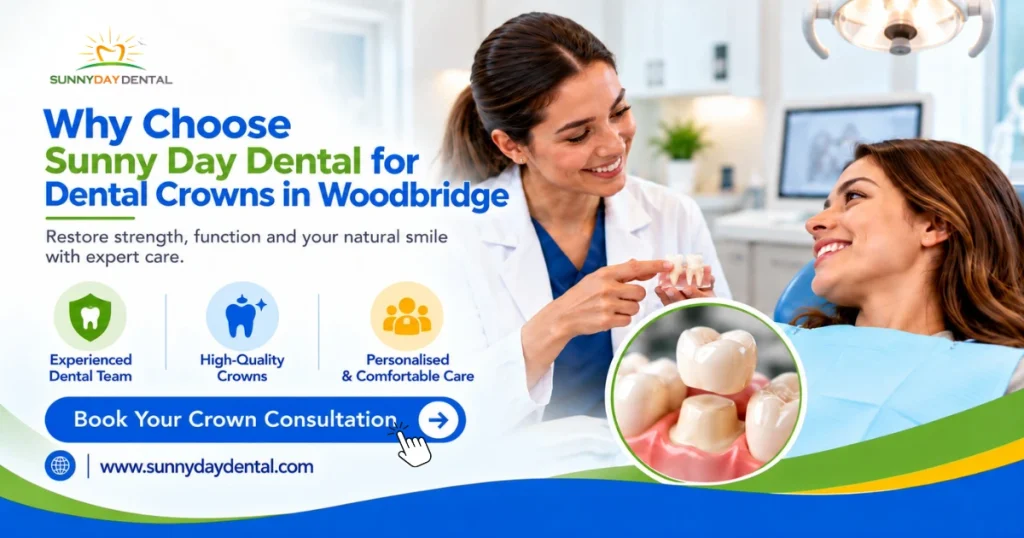
Choosing the right team makes all the difference. As a caring dental crown dentist Woodbridge families trust, we offer gentle, precise crown care, modern technology, and clear pricing with no surprises. With evening and Saturday appointments and friendly guidance on insurance and CDCP, we make dental crowns in Woodbridge easy to plan for. You can explore our dental crowns service page any time.
Book Your Dental Crown Consultation in Woodbridge
If a tooth is damaged, do not wait for it to get worse. A crown can protect it for years to come, and it starts with one simple visit. Book a consultation today and let our team take gentle care of you.
Sunny Day Dental, Woodbridge. Call (905) 605-5020, visit sunnydaydental.com, or come in at 8290 Highway 27, Unit 4, Woodbridge, ON L4H 0S1. Evening and Saturday appointments available. CDCP accepted.
FAQs About Dental Crowns in Woodbridge
Q1. What Is a Dental Crown?
A dental crown is a custom-made cap that fits over a whole tooth, restoring its strength, shape, and appearance down to the gumline. Crowns protect teeth that are cracked, heavily decayed, worn, or root-canalled, and they look and work like a natural tooth.
Q2. How Much Do Dental Crowns Cost in Woodbridge?
A single crown in Woodbridge typically costs about $900 to $2,000, with most patients paying $1,000 to $1,600. The material drives the price, and extras like a root canal add to it. These are general ranges, not quotes, and an exam gives your real number.
Q3. How Long Do Dental Crowns Last?
Most crowns last about 10 to 15 years, and many last 20 to 30 years or more with good care. Gold and zirconia last longest. The main thing that shortens a crown’s life is decay at its edge, which daily cleaning and regular checkups prevent.
Q4. Does Getting a Crown Hurt?
No. The procedure is done under local anesthetic, so you feel pressure rather than pain. Afterward, mild sensitivity for a few days is normal and settles quickly. Most patients find getting a crown far easier and more comfortable than they expected.
Q5. How Many Visits Does a Crown Take?
A traditional crown usually takes two visits: one to prepare the tooth and take an impression, and a second about one to two weeks later to fit the permanent crown. Some offices offer same-day crowns milled on site in a single visit.
Q6. What Are the Types of Dental Crowns?
The main types are all-porcelain or ceramic, porcelain fused to metal, zirconia, and metal or gold. Ceramic and zirconia look most natural, while gold lasts longest on back teeth. Your dentist recommends the best material for your tooth, bite, and budget.
Q7. Does CDCP Cover Dental Crowns?
Yes, for eligible patients aged 18 and older, but only when a crown is medically necessary, not cosmetic, and only with pre-authorisation before treatment. Costs are scaled to income and frequency limits apply. Always confirm your current coverage and get an estimate first.
Q8. How Do I Care for a Dental Crown?
Brush twice a day, floss around the crown daily, and avoid chewing ice or hard objects. Wear a night guard if you grind your teeth, and keep your regular checkups. Good aftercare protects the tooth underneath and helps your crown last for many years.