
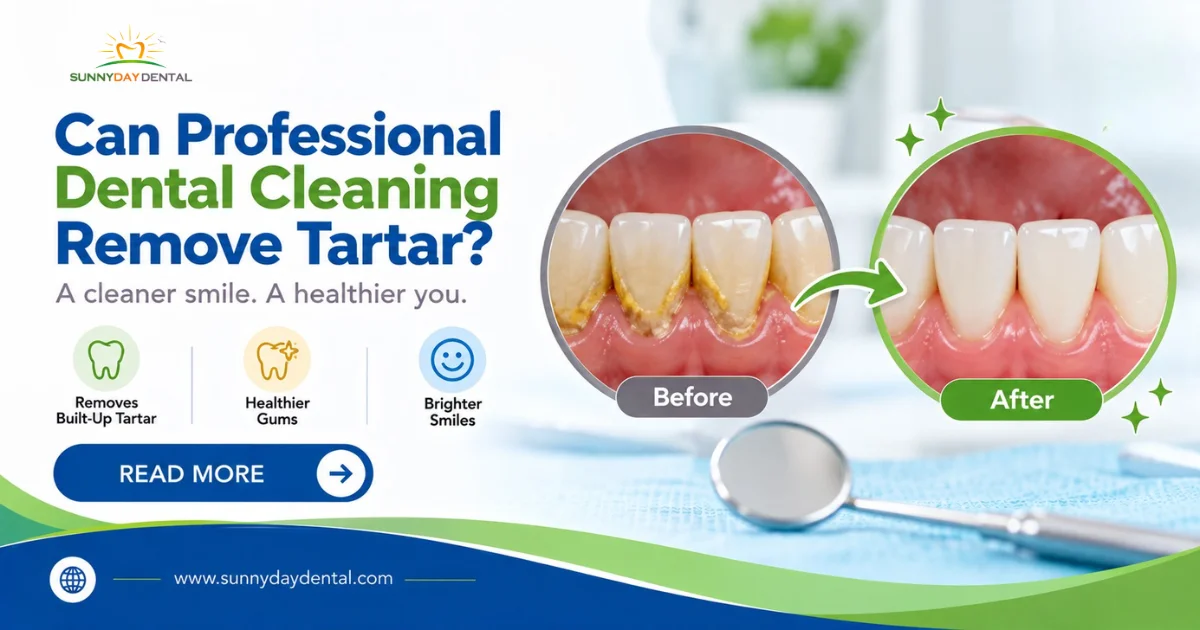
Yes. Dental cleaning for tartar is the only reliable way to remove it. Once plaque hardens into tartar, brushing and flossing cannot shift it, so professional tartar removal with special instruments is essential to protect against cavities and gum disease.
If you have noticed a hard deposit on your teeth, you are dealing with tartar. The common question is: can professional dental cleaning remove tartar? The short answer is yes, and in fact it is the only thing that can. For the full picture, see our guide to dental cleaning in Woodbridge.
What Is Tartar?
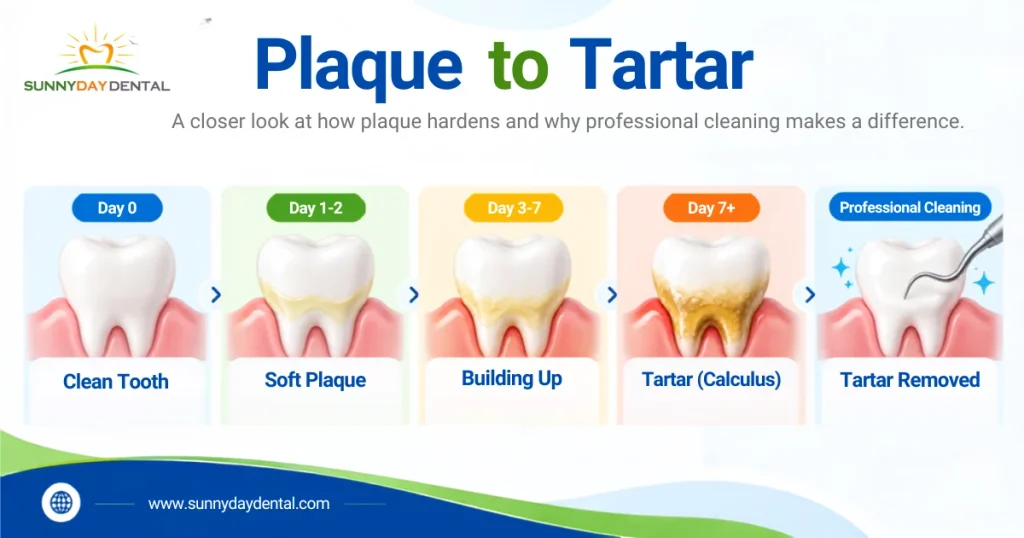
Tartar, also called calculus, is plaque that has hardened. Plaque is the soft, sticky film of bacteria that forms on your teeth every day. If it is not removed, minerals in your saliva turn it into a hard deposit, usually yellow or brown, along the gumline.
Expert Insight
Plaque begins to harden into tartar within about 24 to 72 hours. That is why daily brushing and flossing matter so much, and why, once tartar has formed, only professional removal will work.
Can You Remove Tartar at Home?
No. This is the key point. Brushing and flossing remove soft plaque, which is why they are so important, but they cannot remove hardened tartar. Home tartar-control products can slow new buildup, yet they cannot take off what has already set. Only professional instruments can.
How Professional Cleaning Removes Tartar
During a cleaning, your dental team uses hand instruments and ultrasonic scalers to gently break up and lift tartar from above and below the gumline. This professional tartar removal is safe, precise, and reaches spots you never could at home. A polish then smooths the surface to slow new buildup.

What Happens if Tartar Is Left?
Left in place, tartar keeps irritating the gums and traps more bacteria. This can lead to gum inflammation and, over time, gum disease and even bone loss. It also causes bad breath and staining. Regular plaque and tartar removal stops this cycle before it starts. If you are noticing buildup, our post on the signs you need a cleaning can help.
How to Prevent Tartar Buildup
You cannot stop plaque forming, but you can stop it hardening. Brush twice a day, floss daily, and keep up your regular cleanings. Our oral hygiene tips cover a simple routine. Booking teeth cleaning in Woodbridge every six months keeps tartar in check for good.
Clear Tartar With a Professional Cleaning
Noticed hard buildup on your teeth? A gentle professional cleaning removes it and protects your gums. Book your cleaning today.
Sunny Day Dental, Woodbridge. Call (905) 605-5020, visit sunnydaydental.com, or come in at 8290 Highway 27, Unit 4, Woodbridge, ON L4H 0S1. Evening and Saturday appointments available. CDCP accepted.
FAQs About Dental Cleaning for Tartar
Q1. Can Professional Dental Cleaning Remove Tartar?
Yes. A professional cleaning is the only reliable way to remove tartar. Using hand instruments and ultrasonic scalers, your dental team lifts hardened tartar from above and below the gumline safely and precisely, which brushing and flossing at home cannot do.
Q2. Can I Remove Tartar Myself at Home?
No. Brushing and flossing remove soft plaque but cannot remove hardened tartar. Home tartar-control toothpastes can slow new buildup but cannot take off what has set. Trying to scrape tartar yourself risks damaging your teeth and gums, so leave it to professionals.
Q3. How Quickly Does Plaque Turn Into Tartar?
Plaque begins to harden into tartar within about 24 to 72 hours. This is why brushing twice a day and flossing daily matter so much, and why regular professional cleanings are needed to remove any tartar that does form.
Q4. Is Tartar Removal Painful?
For most people, tartar removal is not painful, though your gums may feel a little sensitive if there is a lot of buildup or inflammation. Your team works gently, and you can ask them to adjust if you feel any discomfort.
Q5. What Happens if I Do Not Remove Tartar?
Left in place, tartar irritates the gums and traps bacteria, which can lead to gum inflammation, gum disease, and eventually bone loss. It also causes bad breath and staining. Regular cleanings remove tartar and stop this cycle.
Q6. How Do I Stop Tartar From Coming Back?
You cannot stop plaque forming, but you can stop it hardening. Brush twice a day, floss daily, limit sugary foods, and keep up regular six-month cleanings. This routine keeps tartar under control and your gums healthy.