
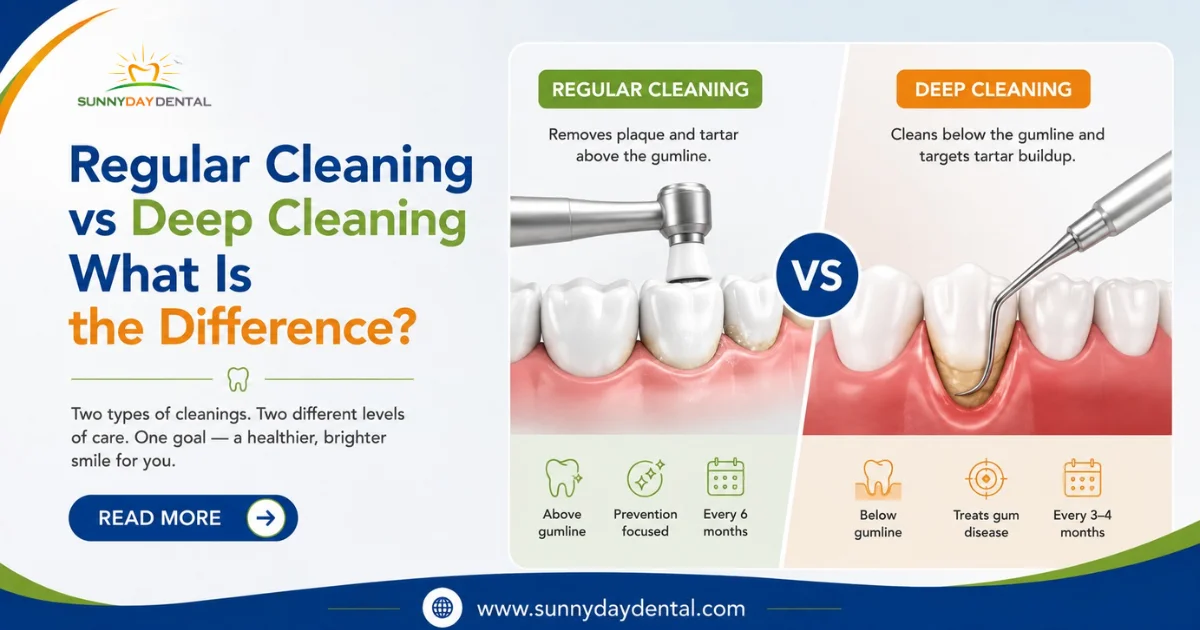
In regular cleaning vs deep cleaning, a regular cleaning removes plaque and tartar at and above the gumline for healthy mouths. A deep dental cleaning, or scaling and root planing, goes below the gumline to treat gum disease. Your dentist recommends the right one after checking your gums.
If your dentist has mentioned a deep cleaning, you may be wondering how it differs from your usual visit. The regular cleaning vs deep cleaning question is a common one, and the answer is simpler than it sounds. For the full picture, see our guide to dental cleaning in Woodbridge.
What Is a Regular Cleaning?
A routine dental cleaning, also called a prophylaxis, is the standard cleaning most people have every six months. It removes plaque and tartar at and above the gumline and finishes with a polish. It is a preventive treatment for healthy mouths, and it keeps them that way.
What Is a Deep Cleaning?
A deep dental cleaning, known clinically as scaling and root planing, goes further. It removes tartar and bacteria from below the gumline and smooths the tooth roots so the gums can heal and reattach. It is a treatment for gum disease, not a routine visit, and it may use a local anesthetic for comfort.
The Key Differences
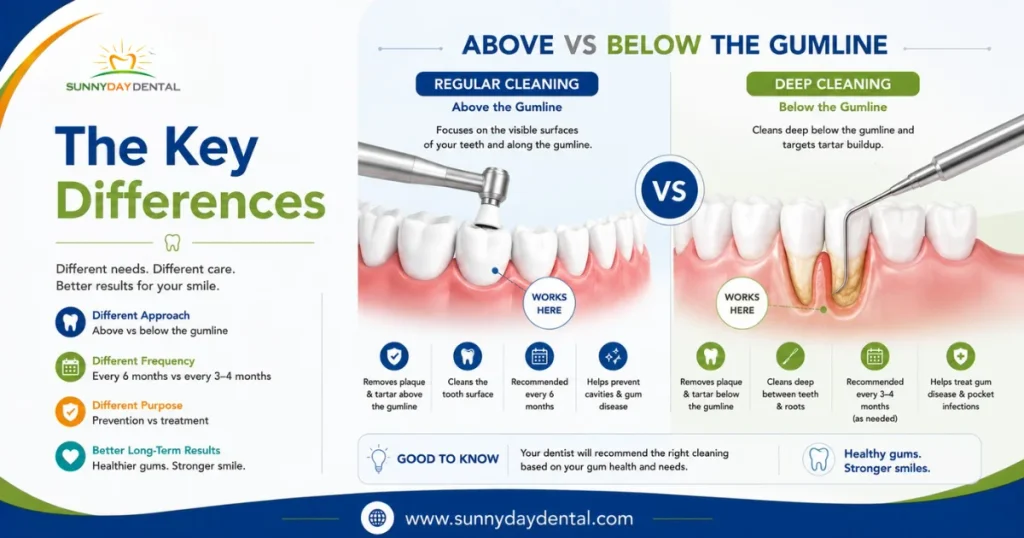
| Feature | Regular Cleaning | Deep Cleaning |
| Purpose | Prevention | Treats gum disease |
| Area | At and above the gumline | Below the gumline |
| Best For | Healthy gums | Gum disease or infection |
| Anesthetic | Usually none | Often a local anesthetic |
| Visits | One appointment | Sometimes more than one |
| Cost | Lower, routine | Higher, billed by area |
Expert Insight
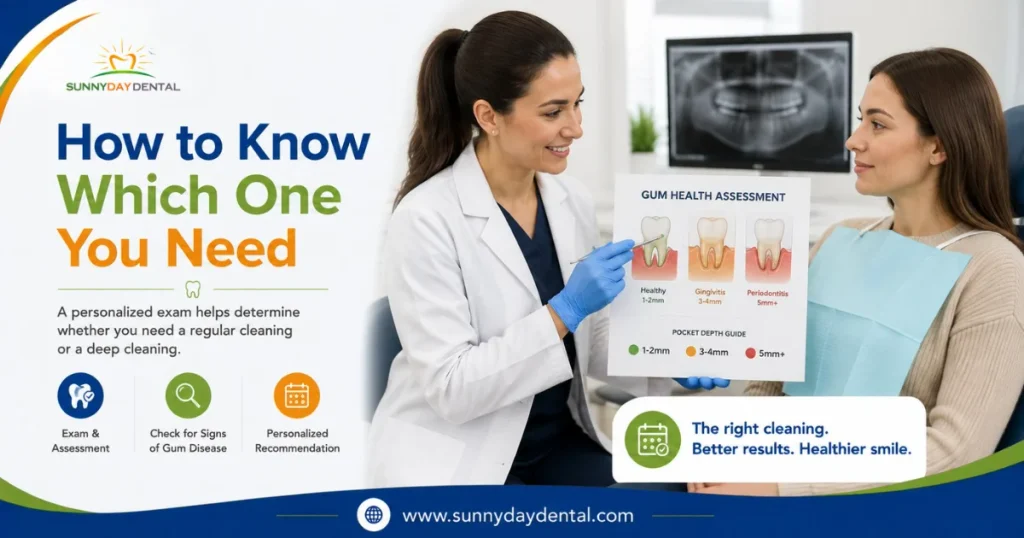
Gum disease is very common, and many adults have some form of it. A deep cleaning is recommended only when there is buildup and inflammation below the gumline, which your dentist confirms by measuring the small pockets around your teeth, not by guesswork.
How to Know Which One You Need
You cannot tell on your own, and that is fine. A dentist for dental cleaning checks your gums, measures the pockets around your teeth, and reviews any bleeding or buildup. Healthy gums need a regular clean. Signs of gum disease call for a deep clean. Good dental cleaning for teeth always starts with a proper look at your gums. If you are noticing signs you may need a cleaning, it is worth booking an assessment.
Recovery and Cost
After a deep cleaning, your gums may feel a little tender for a day or two, which soon settles. A regular clean has no downtime at all. A deep cleaning costs more and is billed by the area treated, while a routine clean is a set, lower fee. See our dental cleaning cost guide for details.
Find Out Which Cleaning You Need

Not sure whether you need a regular or a deep clean? A quick gum assessment gives you a clear answer, with no pressure. Book your cleaning today.
Sunny Day Dental, Woodbridge. Call (905) 605-5020, visit sunnydaydental.com, or come in at 8290 Highway 27, Unit 4, Woodbridge, ON L4H 0S1. Evening and Saturday appointments available. CDCP accepted.
FAQs About Regular Cleaning vs Deep Cleaning
Q1. What Is the Difference Between a Regular and Deep Cleaning?
A regular cleaning removes plaque and tartar at and above the gumline for healthy mouths. A deep cleaning, or scaling and root planing, goes below the gumline to treat gum disease and help the gums heal. Your dentist recommends the right one after checking your gums.
Q2. Do I Really Need a Deep Cleaning?
A deep cleaning is recommended only when there is tartar and inflammation below the gumline, confirmed by measuring the pockets around your teeth. If your dentist advises one, it is to stop gum disease from progressing. It is a treatment, not an upsell.
Q3. Does a Deep Cleaning Hurt?
A deep cleaning is usually done with a local anesthetic, so you should feel little during it. Afterward, your gums may be tender for a day or two, which settles quickly. Tell your dentist if you feel discomfort, and they will keep you comfortable.
Q4. How Much More Does a Deep Cleaning Cost?
A deep cleaning costs more than a routine clean because it is billed by the area of the mouth treated. The total depends on how many areas need it. Your dentist gives you a clear estimate after assessing your gums.
Q5. How Often Do I Need a Deep Cleaning?
A deep cleaning is not routine. It is done when gum disease is present, and may be followed by periodontal maintenance cleanings every three to four months. Once your gums are healthy, you may return to a regular six-month schedule.
Q6. Can a Regular Cleaning Turn Into a Deep Cleaning?
If a routine visit reveals buildup and inflammation below the gumline, your dentist may recommend a deep cleaning instead. They will explain why, show you the findings, and give you an estimate before any treatment goes ahead.