
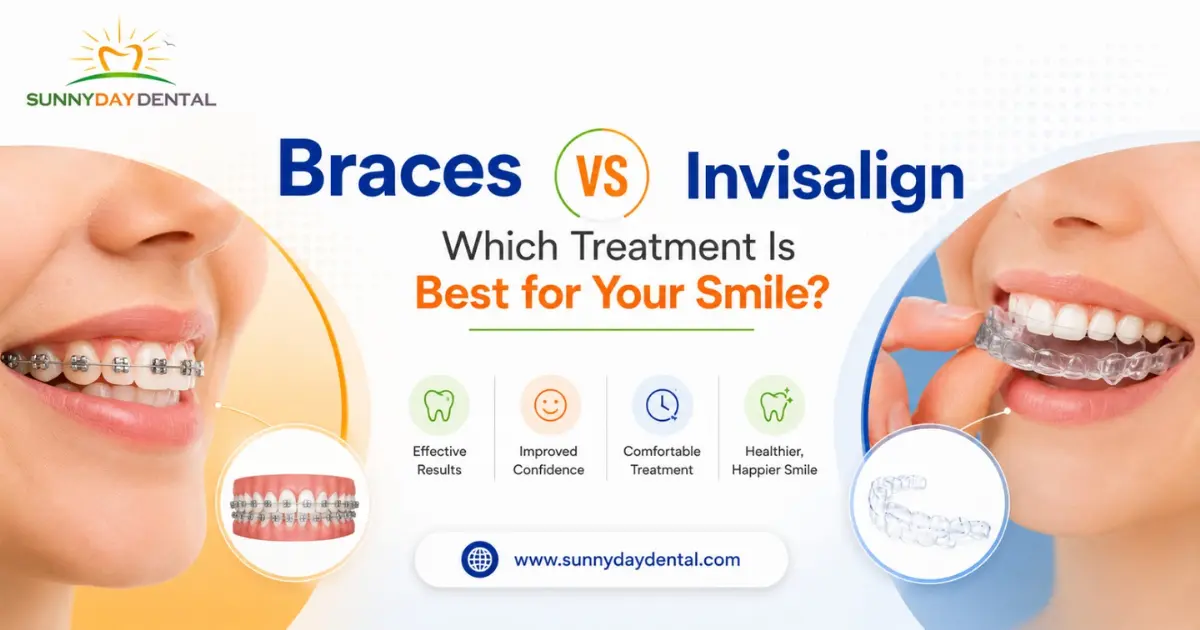
In the Braces vs Invisalign decision, braces are fixed and handle complex cases without daily effort, while Invisalign uses removable, nearly invisible trays that need discipline. Costs are similar. The right choice depends on your case, lifestyle, and goals, which a consultation will help you weigh.
It is one of the most common questions we hear: Braces vs Invisalign, which is better? Both straighten teeth and both can give you a smile you love. They just go about it differently. This guide compares them on the things that matter, so you can find your best fit among today’s teeth straightening options. For the full background, see our guide to orthodontic treatment in Woodbridge.
How Braces Work
Traditional braces use brackets bonded to your teeth and a wire that guides them into place. Because they are fixed, they work around the clock with no effort from you, and they excel at complex movements and bite correction. For a look at the different kinds, see our guide on the types of braces.
How Invisalign Works
Invisalign uses a series of clear, removable aligners, each worn for one to two weeks before you move to the next. They are nearly invisible and come out for meals and brushing. The trade-off is discipline: they only work when worn 20 to 22 hours a day. As part of good orthodontic care, we track your progress at every stage.
Braces vs Invisalign: A Side-by-Side Comparison
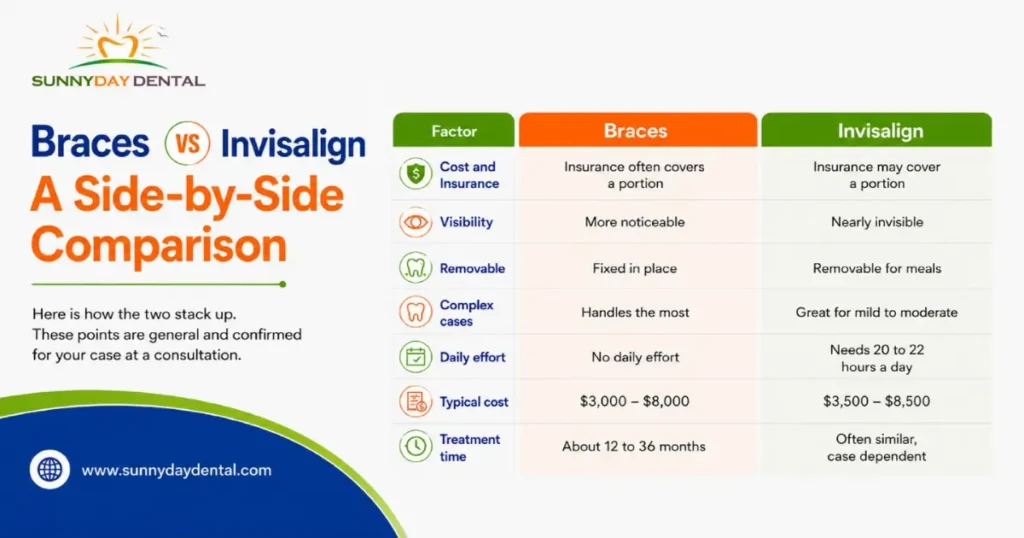
Here is how the two stack up. These points are general and confirmed for your case at a consultation.
| Factor | Braces | Invisalign |
| Visibility | More noticeable | Nearly invisible |
| Removable | Fixed in place | Removable for meals |
| Complex cases | Handles the most | Great for mild to moderate |
| Daily effort | No daily effort | Needs 20 to 22 hours a day |
| Typical cost | $3,000 to $8,000 | $3,500 to $8,500 |
| Treatment time | About 12 to 36 months | Often similar, case dependent |
Expert Insight
Wear time matters more than the brand. Clear aligners only move teeth when worn 20 to 22 hours a day, so success depends heavily on staying consistent. For patients who find that hard, fixed braces are often the more reliable choice.
Cost and Insurance
On invisalign vs braces cost, the two are closer than many people expect, with Invisalign often slightly higher. A useful braces comparison also looks at coverage. Many private plans offer an orthodontic benefit up to a lifetime maximum, and insurance for Invisalign is usually treated the same as braces, though you should confirm with your insurer. Our braces cost guide for Woodbridge has the full picture.

Which Is Right for You?
There is no universal winner. If you want the most discreet option and can stay disciplined, Invisalign is hard to beat. If your case is complex or you would rather not think about it day to day, braces may serve you better. Because orthodontic treatment duration is similar for many cases, lifestyle often tips the decision. If braces feel right, our guide on whether braces hurt explains what to expect. Whatever you choose, Braces treatment in Woodbridge starts with a simple assessment.
Weigh Your Options in Woodbridge

Still torn on Braces vs Invisalign? We will look at your smile and help you choose the option that fits your life. Book your consultation today.
Sunny Day Dental, Woodbridge. Call (905) 605-5020, visit sunnydaydental.com, or come in at 8290 Highway 27, Unit 4, Woodbridge, ON L4H 0S1. Evening and Saturday appointments available. CDCP accepted.
FAQs About Braces vs Invisalign
Q1. Is Invisalign Better Than Braces?
Neither is universally better. Invisalign is discreet and removable but needs discipline, while braces handle complex cases and work without daily effort. The better option depends on your case, lifestyle, and goals. A consultation is the reliable way to decide which suits you.
Q2. Is Invisalign More Expensive Than Braces?
Costs are closer than many expect. Braces generally range from about $3,000 to $8,000 and Invisalign from about $3,500 to $8,500 in Ontario. Invisalign is often slightly higher, but the gap varies by case. Payment plans can spread the cost of either option.
Q3. Does Invisalign Work as Fast as Braces?
For many mild to moderate cases, Invisalign works in a similar timeframe to braces. Complex movements can be faster with braces. Treatment time depends on your case and, with Invisalign, on wearing the trays 20 to 22 hours a day as directed.
Q4. Does Insurance Cover Invisalign?
Many private and employer plans that include orthodontics treat Invisalign the same as braces, often covering a share up to a lifetime maximum. Coverage varies by plan, so confirm your specific benefits with your insurer before starting treatment. CDCP does not cover cosmetic orthodontics.
Q5. Can Invisalign Fix Complex Cases?
Invisalign handles many mild to moderate cases well, and its technology keeps improving. Very complex movements or severe bite issues may still be better treated with braces. An orthodontics can assess whether aligners will achieve your goals or whether braces are the stronger choice.
Q6. Braces or Invisalign for Teens?
Both work well for teens. Invisalign appeals to those who want a discreet option and can be disciplined about wearing it, while braces are reliable when compliance is a concern or the case is complex. The right pick depends on the teen’s needs and habits.