
As a pediatric dentist in Woodbridge, Canada, I often meet families who bring their children for their first dental appointment only after a concern appears. Often, parents explain that no symptoms appeared until a cavity or discomfort developed. From our experience at Sunny Day Dental, many families bring their kids for a children’s dental checkup only after a dental concern appears. Many children miss the opportunity for early preventive care because dental visits start later than recommended.
Parents often prioritize nutrition, school readiness, and overall health, so dental care often becomes a lower priority even though it plays an important role in early development. Regular children’s dental checkup visits help families build healthy habits that support long-term child oral health.
Across Canada, dental professionals encourage early visits to guide baby teeth care, monitor development, and support healthy smiles from the start.
Why Many Children Visit the Dentist Later Than Recommended
Parents often assume a dental visit is necessary only when a child complains about discomfort. From a clinical perspective, waiting for symptoms means missing early opportunities to prevent dental problems.
As apediatric dentist, I often see children coming for their first child dental checkup long after their baby teeth have developed. This delay often happens for several reasons. A routine children dental checkup helps guide dental development, prevent problems early, and support long-term child oral health.
5 Factors That Delay Early Dental Visits for Children
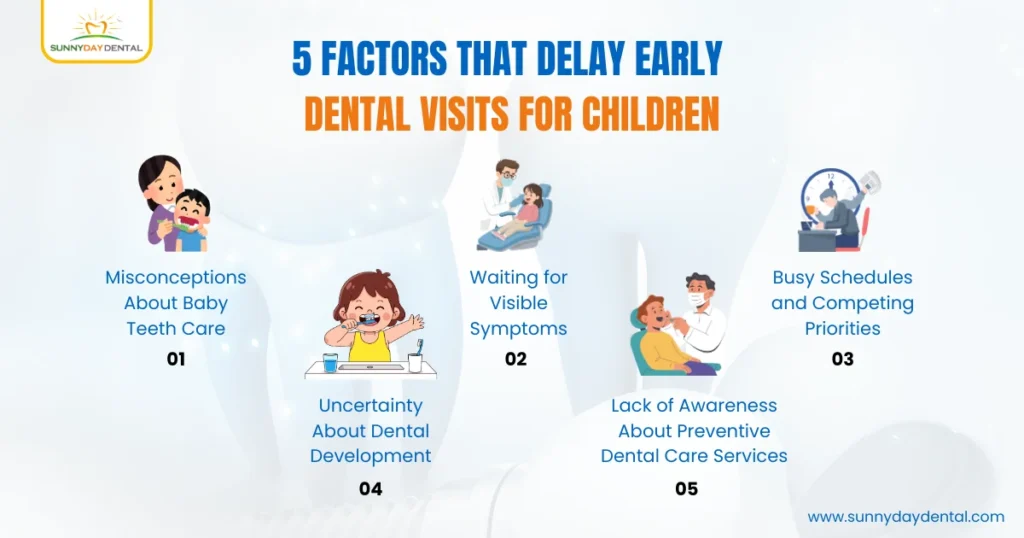
1. Misconceptions About Baby Teeth Care
Some parents believe that because baby teeth eventually fall out, they do not require professional care. Proper baby teeth care becomes easier when children attend a regular children dental checkup to monitor early development.
2. Waiting for Visible Symptoms
Families sometimes schedule a visit only after pain appears. A routine children’s dental checkup helps detect small concerns before they develop into cavities or infections.
3. Busy Schedules and Competing Priorities
Parenting involves many responsibilities. Regular dental visits may be postponed, even though a short children’s dental exam can prevent complex treatment later.
4. Uncertainty About Dental Development
Parents do not realize that a pediatric dentist also evaluates bite alignment and growth patterns through a child’s orthodontic evaluation.
5. Lack of Awareness About Preventive Dental Care Services
Professional children’s dental cleaning removes plaque in areas brushing cannot reach, protecting teeth before cavities form.
Understanding these challenges helps families take a proactive approach to their child’s dental care.
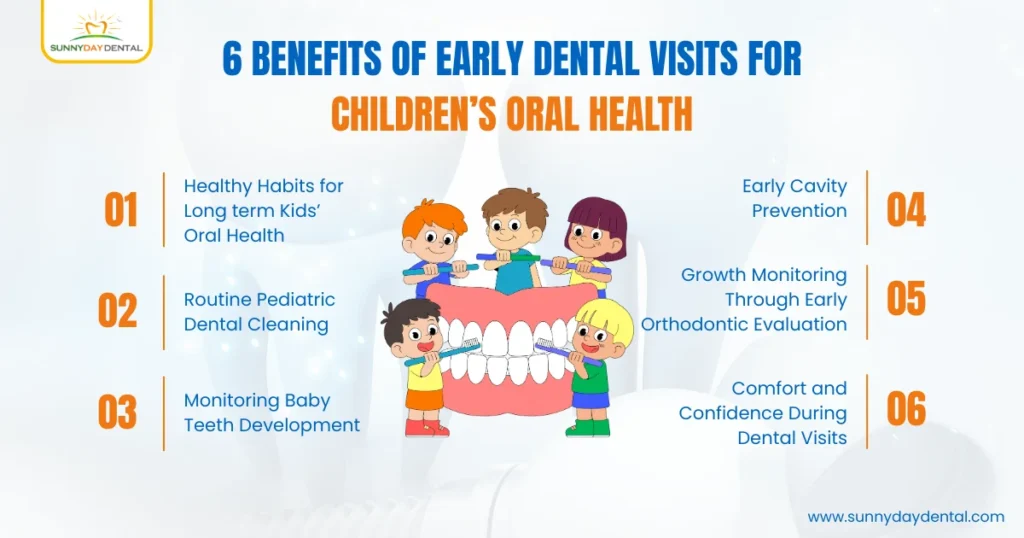
6 Benefits of Early Dental Visits for Children’s Oral Health
Early dental visits provide a routine examination. They create an environment where prevention, education, and growth monitoring support each other. Guidance from dental professionals helps families understand how daily habits influence oral health. When visits start early, children learn that dental care is part of a healthy routine.
Early dental visits begin with a children’s dental checkup and provide several benefits for growing smiles.
1. Healthy Habits for Long-term Kids’ Oral Health
During visits, dentists guide families on brushing routines, nutrition, and oral hygiene habits that protect children’s dental health.
2. Routine Pediatric Dental Cleaning
A gentle kids’ teeth cleaning removes plaque buildup that may not be visible during daily brushing.
3. Monitoring Baby Teeth Development
Consistent baby teeth care helps ensure primary teeth remain strong until permanent teeth are ready to emerge.
4. Early Cavity Prevention
A regular children’s dental checkup allows dentists to identify weak enamel areas before cavities form.
5. Growth Monitoring Through Early Orthodontic Evaluation
Jaw development changes rapidly in childhood. A child orthodontic evaluation helps detect alignment concerns early.
6. Comfort and Confidence During Dental Visits
Regular children’s dental exam appointments help children become familiar with the dental environment, reducing anxiety over time.
By building a foundation of preventive care, the child’s first dental checkup approach helps families support healthy smiles through every stage of childhood.
Why Baby Teeth Care Matters in Early Childhood
Baby teeth are temporary, but their function is essential. They help children chew properly, pronounce words clearly, and maintain space for adult teeth. When baby teeth care is neglected, several issues can develop. Cavities in baby teeth can spread quickly and affect nearby teeth.
Preventive care for baby teeth usually includes several essential practices:
- routine children’s dental checkup visits
- regular pediatric dental cleaning appointments
- monitoring growth during each kids’ dental exam
- guidance for brushing and nutrition
- observation of bite patterns through early orthodontic evaluation
Together, these steps support strong children’s oral health during the early years.
Recommended Age for a Child’s First Pediatric Dentist Visit
Children should visit a pediatric dentist within six months after the first tooth appears or by age one. Early dental visits allow dentists to monitor children’s dental health, provide pediatric dental cleaning, perform children’s dental exams, and evaluate bite development.
Why Early Orthodontic Evaluation Matters for Growing Smiles
Dental development begins early in childhood, not during adolescence. Jaw growth and tooth alignment start developing long before braces are needed. A bite evaluation for children helps dentists observe how teeth and jaw structures grow together and identify alignment concerns early.
During routine visits, dentists review dental development, including tooth eruption, bite alignment, and jaw growth, to support healthy development.
- spacing between baby teeth
- bite alignment and jaw balance
- eruption patterns of permanent teeth
- Oral habits that affect dental growth
These observations during a children’s dental exam help protect long-term children’s oral health and ensure proper dental development.
Encouraging Healthy Dental Habits at Home
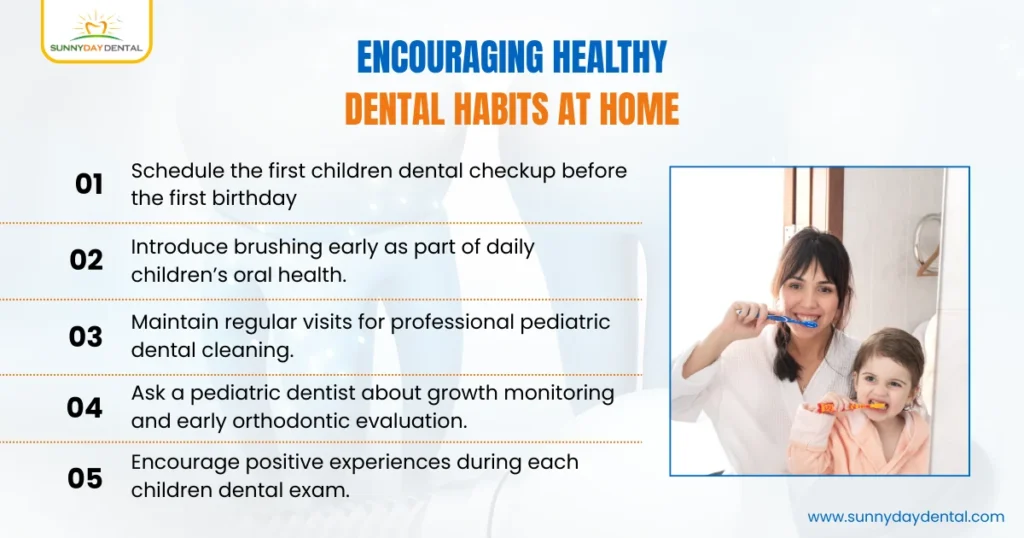
Parents play an important role in supporting the child first dental approach and helping children build lifelong healthy dental habits.
The following actions support preventive dental care
- Schedule the first children dental checkup before the first birthday.
- Introduce brushing early as part of daily children’s oral health.
- Maintain regular visits for professional pediatric dental cleaning.
- Ask a pediatric dentist about growth monitoring and early orthodontic evaluation.
- Encourage positive experiences during each children dental exam.
Healthy daily habits combined with regular professional dental care help protect children’s long-term oral health.
Looking for a Pediatric Dentist? Sunny Day Dental Can Help
Sunny Day Dental follows a child first dental approach, helping children build healthy habits through routine children dental checkup visits, professional pediatric dental cleaning, and guidance for proper kids’ dental hygiene. The clinic also monitors child oral health through regular dental exams and early orthodontic evaluation.
Parents seeking a trusted pediatric dentist in Woodbridge can visit Sunny Day Dental for gentle, preventive dental care designed specifically for children. Early visits help children build confidence while protecting their long-term oral health.
Starting dental visits early helps children receive preventive care and maintain a healthy smile for the future.
FAQs About Children Dental Checkup
1. How can parents make dental visits comfortable for young children?
Parents can prepare children by speaking positively about dental care, reading children’s books about dentist visits, and scheduling appointments at times when the child is well rested.
2. What foods help protect children’s teeth?
Foods rich in calcium, such as dairy products, leafy greens, and nuts, help strengthen enamel. Crunchy fruits and vegetables help naturally clean teeth.
3. Are cavities common in young children?
Yes, cavities can develop quickly in baby teeth because the enamel is thinner than in adult teeth. Regular brushing and dental visits help prevent decay.
4. How can thumb sucking affect teeth development?
Persistent thumb sucking can influence bite alignment and jaw growth. Dentists monitor these habits to determine if intervention is necessary.
5. What signs suggest a child may need orthodontic care later?
Early signs may include crowded teeth, difficulty chewing, or uneven bite patterns. Dentists monitor these indicators during routine dental visits.