
If you have ever looked at your tongue in the mirror and noticed a white coating, you are not alone. Many patients at Sunny Day Dental ask whether tongue scraping is necessary or just another oral health trend. As a trusted dental office in Woodbridge, we believe in combining science, practical guidance, and patient centered care to help you make informed decisions.
In this comprehensive guide, we will explore tongue scraping from every angle. We will cover what it is, how it works, tongue scraping for bad breath, possible tongue scraping side effects, the science behind halitosis tongue, and even the debate around tongue scraper vs brushing. Our goal is simple, give you clarity based on current research and real clinical experience.
What Is Tongue Scraping and Why Does It Matter
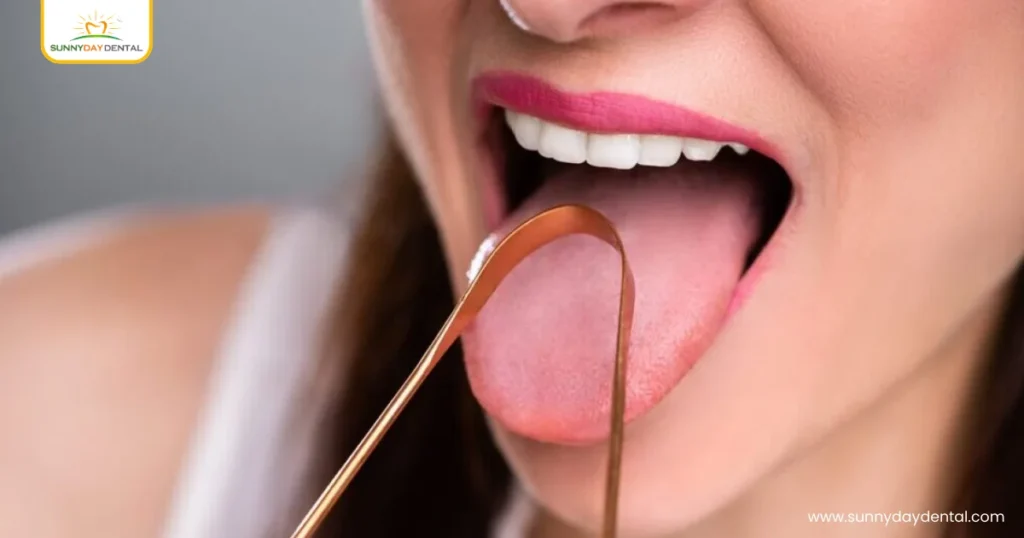
Tongue scraping is the mechanical removal of bacteria, food debris, and dead cells from the surface of the tongue using a specially designed tool. The surface of your tongue contains tiny projections called papillae. These papillae can trap bacteria and form a biofilm. Over time, that biofilm can contribute to bad breath, taste changes, and oral inflammation.
When we talk about tongue scraping in clinical dentistry, we are referring to a targeted approach to reducing bacterial load on the dorsal surface of the tongue. Studies up to 2026 continue to show that the tongue plays a major role in producing volatile sulfur compounds, which are strongly linked to halitosis tongue conditions.
From a dental perspective, tongue scraping is not about cosmetic appearance alone. It is about managing biofilm and supporting overall oral hygiene.
How Tongue Scraping Works, The Science Explained
The science behind tongue scraping centers on biofilm removal. Biofilm is a structured community of bacteria embedded in a protective matrix. It forms on teeth, gums, and the tongue. Mechanical disruption is one of the most effective ways to reduce it.
Recent reviews show that mechanical tongue cleaning can reduce volatile sulfur compounds more effectively than brushing the tongue with a toothbrush alone in some cases. This is why tongue scraping for bad breath is frequently recommended as part of a broader oral care routine.
However, evidence also suggests that technique matters more than the specific tool. The debate around tongue scraper vs brushing continues, but most experts agree that targeted mechanical cleaning of the tongue surface is beneficial when done correctly.
The key point is this, tongue scraping reduces bacterial accumulation, but it does not replace brushing and flossing. It complements them.
Tongue Scraping for Bad Breath, What You Should Know
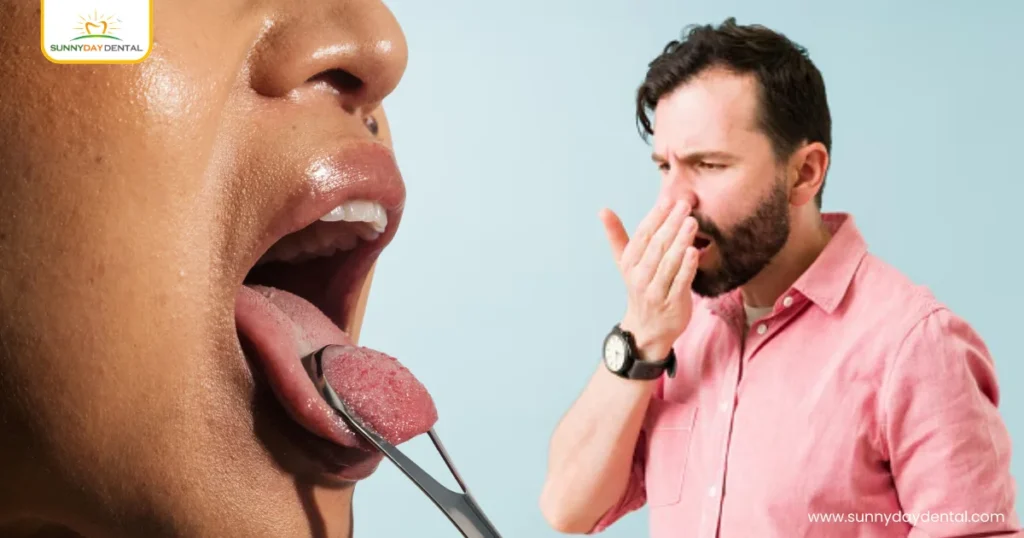
Bad breath often originates from the tongue. The back of the tongue is a common reservoir for odor causing bacteria that produce volatile sulfur compounds. That is why tongue cleaning for fresher breath has gained so much attention.
Before we list the benefits, it is important to understand that halitosis tongue conditions are multifactorial. Gum disease, dry mouth, diet, and systemic conditions can all contribute. Tongue scraping is one tool in a larger strategy.
How Tongue Scraping Helps Control Bad Breath
- Reduces volatile sulfur compounds linked to halitosis
- Removes trapped debris in tongue papillae
- Improves overall freshness perception
- Supports gum health indirectly
Regular tongue cleaning can help control bad breath by reducing odor causing bacteria. At our dental office in Woodbridge, we recommend it as part of a personalized hygiene plan and regular professional cleanings
Tongue Scraping Side Effects, What Are the Risks
While generally safe, tongue scraping side effects can occur if done incorrectly. Overly aggressive scraping can irritate or damage the papillae. Some patients may experience gag reflex sensitivity, minor bleeding, or temporary discomfort.
Reported potential risks of tongue scraping may include:
- Small surface abrasions if too much pressure is applied
- Increased sensitivity on the tongue
- Irritation in patients with geographic tongue
- Rare cases of minor bleeding
Most reported complications of tongue scraping are preventable with proper technique. Use light pressure, start from the back of the tongue gently, and rinse the scraper after each pass. If you notice persistent pain or bleeding, stop and consult a dentist.
Tongue Scraper vs Brushing, Which Is Better
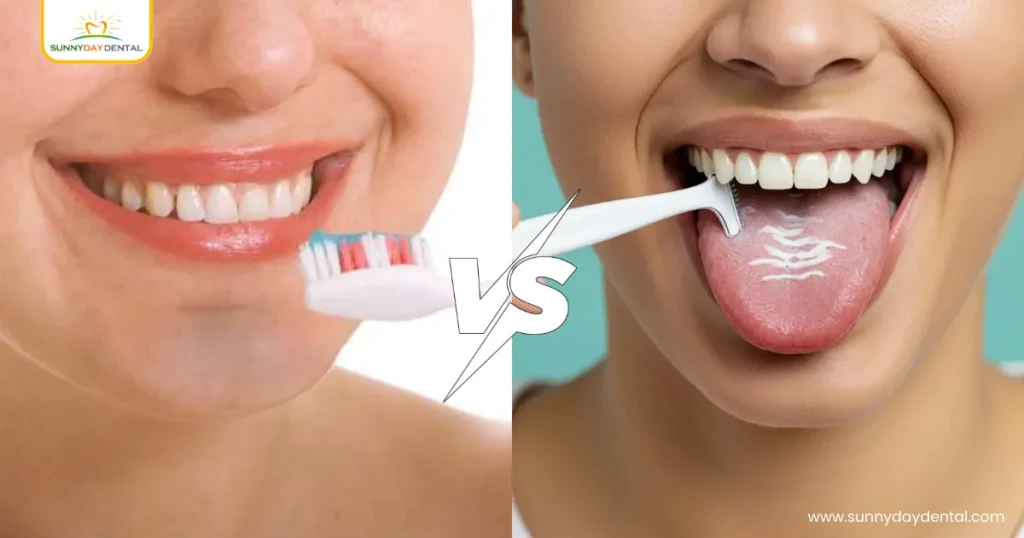
The discussion around tongue cleaner vs toothbrush often confuses patients. A toothbrush can remove some surface debris, but it is not specifically designed for the tongue’s textured surface.
Research indicates that tongue scraper versus brushing comparisons show scrapers may remove more volatile sulfur compounds in the short term. However, technique is crucial. Brushing the tongue gently can still provide benefit.
Here is a simple comparison:
- Tongue scraper, designed for mechanical biofilm removal, often more efficient
- Toothbrush, convenient but less targeted
- Both can be effective if used properly
In our clinical experience, the choice between tongue scraper vs brushing depends on patient comfort, gag reflex sensitivity, and overall oral health goals.
4 Steps to Practice Tongue Scraping Safely
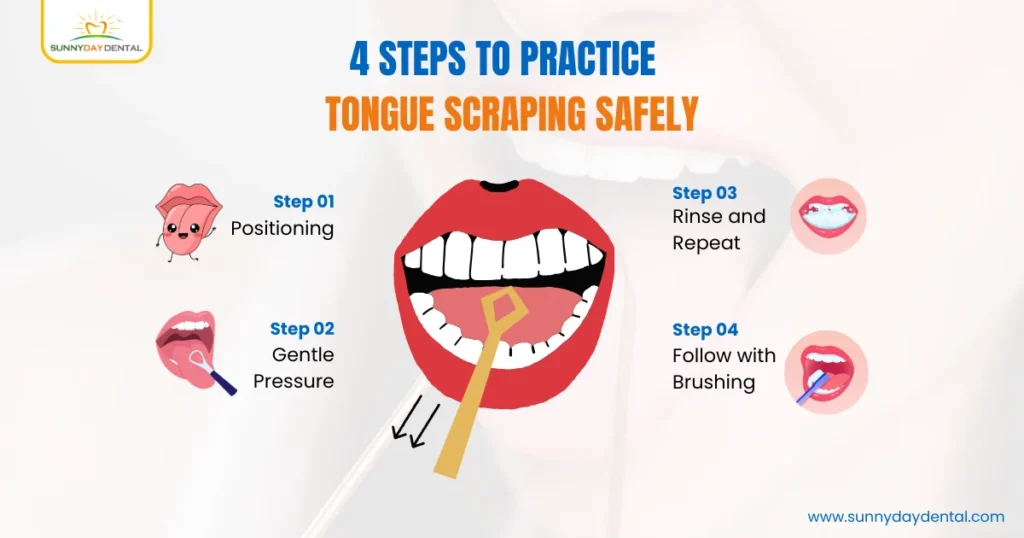
Before beginning, ensure you are using a clean, high quality scraper.
Step 1, Positioning
Stick out your tongue comfortably. Place the scraper at the back of the tongue, avoiding excessive force.
Step 2, Gentle Pressure
Pull the scraper forward with light, even pressure. Do not dig into the tissue.
Step 3, Rinse and Repeat
Rinse the scraper after each pass. Repeat two to three times.
Step 4, Follow with Brushing
Complete your routine with brushing and flossing.
Practicing tongue scraping once daily is sufficient for most patients. Excessive frequency increases the risk of tongue scraping side effects without added benefit.
The Role of Tongue Scraping in Overall Oral Health
Tongue scraping helps remove bacteria and buildup from the surface of the tongue. This supports fresher breath and improves overall oral hygiene. By reducing excess biofilm, it can also help lower the number of odor causing bacteria in the mouth. This may make your daily brushing and flossing routine more effective.
However, tongue scraping does not replace brushing, flossing, or regular dental checkups. It works best as an added step in a complete preventive care routine. When used gently and consistently, tongue scraping can help maintain a cleaner mouth, support better breath, and contribute to long-term oral health.
When You Should Avoid Tongue Scraping
Tongue scraping is usually safe, but there are times when you should pause or avoid it.
Do not scrape your tongue if you have:
- Painful mouth sores or active oral ulcers
- Recent tongue or oral surgery
- Ongoing tongue pain without a clear reason
- A strong gag reflex that makes the process uncomfortable or distressing
If your tongue feels sore, swollen, or sensitive, it is best to wait until it heals. Scraping irritated tissue can make the problem worse.
When in doubt, speak with a dental professional before starting tongue scraping. A quick evaluation can help you decide if it is safe and appropriate for your oral health condition.
Myths and Facts About Tongue Scraping
There is plenty of confusion online about tongue scraping, especially when linked to trends like tongue scraping and oil pulling or traditional tongue scraping Ayurveda practices. As dental professionals, we believe decisions should be guided by science, not social media.
Let’s clarify the most common myths.
Myth 1, Tongue Scraping Cures All Bad Breath
Fact: Tongue scraping helps reduce bacteria linked to dorsal tongue biofilm issues, but it does not treat every cause of bad breath. Gum disease, cavities, and dry mouth may also be responsible.
Myth 2, Tongue Scraping and Oil Pulling Are the Same
Fact: Tongue scraping mechanically removes biofilm from the tongue surface, while oil pulling reduces bacteria in saliva. They work differently, and neither replaces brushing or flossing.
Myth 3, Tongue Scraping Ayurveda Is Not Scientific
Fact: Tongue scraping Ayurveda has long promoted daily tongue cleaning. Modern dentistry supports the practice for biofilm control, even if the explanations differ.
Myth 4, Scraping Harder Works Better
Fact: Excess pressure increases the risk of negative effects of tongue scraping. Gentle technique is more effective and safer.
Myth 5, Everyone Must Scrape
Fact: Tongue scraping can benefit many people, especially those with oral malodor concerns, but it should be personalized and discussed with a dental professional.
Understanding these facts helps you make informed, balanced decisions about your oral health routine.
Get Expert Advice on Tongue Scraping at Sunny Day Dental

Tongue scraping can support fresher breath and improve oral hygiene, but it should be done correctly and tailored to your individual needs. Not every routine works the same for everyone, and factors like gum health, sensitivity, and existing dental conditions matter.
At Sunny Day Dental, we provide personalized guidance based on clinical experience and the latest research. Whether you are dealing with bad breath, tongue coating, or simply want to improve your daily oral care routine, our team is here to help.
Call Sunny Day Dental today or book your appointment online to receive professional advice tailored to your smile.
FAQs About Tongue Scraping
1. Can children practice tongue scraping safely?
Children can practice tongue cleaning under supervision once they understand gentle technique. A soft approach is essential to avoid irritation.
2. How often should I replace my tongue scraper?
Most scrapers should be replaced every three to four months, similar to toothbrushes, especially if signs of wear appear.
3. Does tongue scraping help with dry mouth?
It does not treat dry mouth directly, but removing debris may improve comfort. Dry mouth usually requires hydration strategies and professional evaluation.
4. Can tongue scraping prevent cavities?
Cavities primarily form on teeth. While reducing bacteria on the tongue may help overall hygiene, it is not a substitute for fluoride and brushing.
5. Is it normal for my tongue to look pink after scraping?
Yes, a healthy tongue is typically pink. If redness is accompanied by pain or swelling, seek professional advice.