
Wisdom teeth are the last molars to appear, often between ages 17 and 25. For some, they settle in quietly. For others, they become a painful dental emergency that can’t wait for the next check-up.
Ignoring wisdom tooth pain can lead to swelling, infection, and even damage to nearby teeth. If you’ve been trying to wait it out, this is the moment to pay attention.
Here are eight signs it’s time to see an emergency dentist in Woodbridge for immediate wisdom tooth removal.
Do I Need My Wisdom Teeth Removed?
Not everyone needs their wisdom teeth extracted, but most people do at some point. The decision depends on how your teeth grow, their position, and whether they cause pain or crowding.
Your dentist may recommend removal if:
- The tooth is impacted (stuck under the gum or bone).
- It’s growing at an angle and pushing against nearby teeth.
- It causes repeated infections, swelling, or gum irritation.
- There’s decay or cyst formation around the tooth.
Even if your wisdom teeth aren’t painful now, X-rays can reveal hidden problems developing below the surface. That’s why regular dental checkups are essential; early detection helps you avoid sudden wisdom tooth pain or emergency surgery later on.
8 Symptoms That Mean It’s Time for Wisdom Tooth Removal
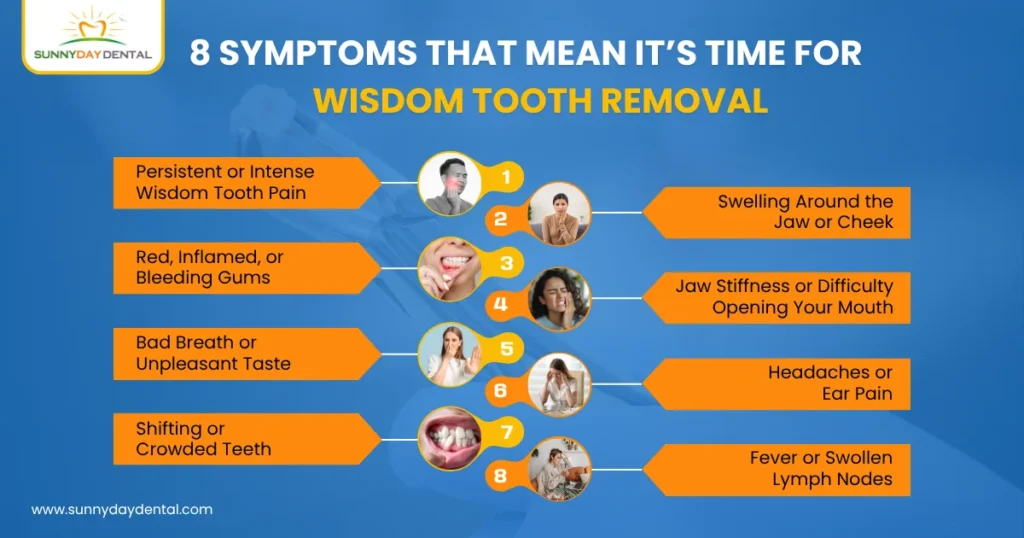
Wisdom teeth don’t always cause pain right away, but when they start to push against other teeth or get trapped under the gums, symptoms appear quickly.
Here’s how to tell when it’s time to see your dentist before things get worse.
1. Persistent or Intense Wisdom Tooth Pain
Ongoing pain at the back of your mouth, especially while chewing, is one of the first warning signs. This usually means your wisdom tooth is trapped under the gum (impacted) or pushing against another tooth.
If the pain keeps coming back or radiates to your ear or jaw, it’s a strong sign you may need emergency extraction. Painkillers might dull the discomfort for a while, but they won’t fix the root cause.
2. Swelling Around the Jaw or Cheek

Swelling near your jawline or behind your molars often points to infection or inflammation. This can happen when food or bacteria get trapped under the gum flap around a partially erupted wisdom tooth.
Warm compresses may soothe the area, but if the swelling spreads, feels firm, or makes your face look uneven, seek professional help right away. It could be an abscess forming beneath the surface, which needs urgent treatment.
3. Red, Inflamed, or Bleeding Gums
If your gums are sore, red, or bleed while brushing, don’t ignore it, especially near your wisdom teeth. This irritation often signals pericoronitis, an infection around a tooth that’s partly covered by gum tissue.
Left untreated, bacteria can spread deeper into the jaw or bloodstream, turning a minor infection into a serious health issue. Early treatment keeps things simple and prevents more complex problems later.
4. Jaw Stiffness or Difficulty Opening Your Mouth
Do you find it hard to open your mouth fully or move your jaw comfortably? Impacted wisdom teeth can put pressure on surrounding muscles and joints, leading to stiffness or pain while talking or eating.
If this symptom appears suddenly or worsens quickly, it’s time to contact an emergency dentist in Woodbridge. The tooth could be pressing against a nerve or causing inflammation inside the joint.
5. Bad Breath or Unpleasant Taste

Bad breath that doesn’t go away even after brushing or rinsing can be a sign of infection. Bacteria trapped around an impacted tooth release sulfur compounds that cause an unpleasant smell and taste.
You may also notice discharge or pus from the gums behind your molars. This is a clear sign that infection has already set in and needs urgent care.
6. Headaches or Ear Pain
Wisdom teeth can cause more than just mouth pain. When the roots push against nerves near the jaw joint, the pain can radiate upward, causing headaches or ear discomfort.
If over-the-counter medication doesn’t help and the pain feels deep, pulsing, or keeps returning, schedule a dental visit. It may not be a sinus or ear problem at all, but your wisdom tooth pressing against a nerve pathway.
7. Shifting or Crowded Teeth
If your once-straight teeth suddenly feel crowded or you notice new overlapping, your wisdom teeth might be to blame. As they erupt, they can push existing teeth out of alignment and even undo years of orthodontic work.
Your dentist may recommend removal before this pressure causes permanent movement or bite changes. Early intervention can prevent the need for braces or other complex treatment later.
8. Fever or Swollen Lymph Nodes

A fever or swelling under your jaw often indicates that the infection has spread beyond the tooth itself. This is a red flag for emergency wisdom tooth removal. The infection can worsen quickly if left untreated.
Fever is your body’s way of sounding the alarm. Don’t wait for it to settle on its own. Visit a dental clinic immediately to get the area cleaned, drained, and the problem tooth safely extracted.
How Painful Is Wisdom Teeth Removal?
It’s completely normal to feel nervous about pain during wisdom tooth extraction, but the truth is, the procedure itself is usually virtually painless. Your emergency dentist in Woodbridge will use local anesthesia or sedation to numb the area fully before starting.
You may feel some pressure as the tooth is removed, but not sharp pain.
After the extraction, mild soreness or swelling can last for two to three days. This is usually easy to manage with prescribed medication, ice packs, and rest. Most patients say the discomfort is far less than they expected, especially compared to the pain they felt before removal.
If you follow your dentist’s aftercare instructions, recovery is usually smooth, and most people can return to normal eating within a few days.
Signs of Infection After Wisdom Tooth Removal
After your wisdom teeth are removed, some mild soreness and swelling are normal for a few days. But if pain or swelling suddenly increases instead of improving, it could point to an infection that needs prompt attention.
Watch out for:
- Persistent or worsening pain after the third day, instead of gradual relief
- Swelling that grows larger or spreads to your cheek or jaw
- Fever or chills, signaling your body is fighting an infection
- Foul taste or bad breath that doesn’t go away with rinsing
- Discharge or pus near the extraction site
- Difficulty opening your mouth or swallowing comfortably
If you notice any of these symptoms, contact your emergency dentist in Woodbridge right away. Infections can progress quickly, but early treatment, such as cleaning, antibiotics, or drainage, usually resolves the problem without complications.
Finding Relief from Wisdom Tooth Pain
Mild discomfort is normal when wisdom teeth erupt, but pain that interferes with daily life is not.
Until you see your dentist, you can try these short-term wisdom toothache relief steps:
- Rinse with warm salt water to reduce inflammation.
- Use a cold compress on the cheek to control swelling.
- Avoid hard, sticky, or sugary foods that can irritate the gums.
- Keep the area as clean as possible with gentle brushing.
- Take only dentist-approved pain relievers.
If the pain persists for more than 24 hours or keeps returning, schedule a check-up. It may be a sign of infection or impaction developing beneath the gum line.
Emergency Wisdom Tooth Removal at Sunny Day Dental

At Sunny Day Dental, our emergency dentist in Woodbridge performs gentle, precise wisdom tooth removal using advanced imaging and numbing techniques to keep you comfortable.
Here’s what you can expect:
- Same-day emergency appointments for severe pain or swelling
- Comprehensive wisdom tooth evaluation and digital X-rays
- A clear explanation of your options before treatment
- Personalized post-removal care instructions for faster recovery
Don’t wait until the pain becomes unbearable. Early intervention prevents infection, protects your other teeth, and helps you get back to eating, speaking, and smiling comfortably.
FAQs About Wisdom Tooth Pain and Removal
1. How do I know if my wisdom tooth pain is serious?
If pain lasts more than a day, causes swelling, or spreads to your ear, jaw, or head, it’s time for a dental visit. These are common signs of impaction or infection that should not be ignored.
2. Can wisdom tooth pain go away on its own?
Temporary soreness might ease, especially while the tooth is erupting. But wisdom tooth pain caused by impaction or infection usually does not go away on its own and often gets worse without treatment.
3. How long does recovery take after wisdom tooth removal?
Most patients recover within 5–7 days. Following your dentist’s care plan, resting, using ice packs, and eating soft foods, helps reduce swelling and speeds up healing.
4. Can an emergency dentist remove a wisdom tooth on the same day?
Yes. At Sunny Day Dental, same-day wisdom tooth removal is available for urgent cases involving infection, severe discomfort, or swelling, as long as it’s safe to proceed after your exam and X-rays.
5. What happens if I delay wisdom tooth extraction?
Delaying treatment can lead to infection, gum damage, or shifting of nearby teeth. In some cases, cysts can form around impacted teeth. It’s always better to treat early and avoid more serious complications later.