

A dry mouth may seem like a small inconvenience at first. Maybe you feel thirsty all the time, or your mouth feels sticky when you wake up. But when dry mouth becomes frequent or persistent, it’s often a sign that something deeper is going on.
Medically known as xerostomia, dry mouth is more than just a lack of saliva. Saliva plays a critical role in protecting your teeth, gums, and overall oral health. Without enough of it, everyday activities like eating, speaking, and even sleeping can become uncomfortable.
Let’s break down what dry mouth really means, why it happens, and the best treatment options available.
What Is Dry Mouth (Xerostomia)?

Dry mouth occurs when your salivary glands don’t produce enough saliva to keep your mouth moist. Saliva is essential because it helps wash away food particles, neutralize acids, and protect against cavities and infections.
When saliva flow is reduced, the mouth becomes dry, uncomfortable, and more vulnerable to dental problems. Occasional dryness can happen to anyone, but ongoing dry mouth should never be ignored.
Common Symptoms of Dry Mouth
Dry mouth doesn’t feel the same for everyone. Some people notice mild discomfort, while others experience significant oral health issues.
Common symptoms include:
- A constant dry or sticky feeling in the mouth
- Thick or stringy saliva
- Difficulty chewing, swallowing, or speaking
- Dry or cracked lips
- Bad breath
- A burning sensation in the mouth or tongue
- Increased tooth sensitivity or cavities
If you’ve ever asked yourself, why is my mouth always dry, these symptoms are your body’s way of asking for attention.
5 Common Causes of Dry Mouth (Xerostomia)
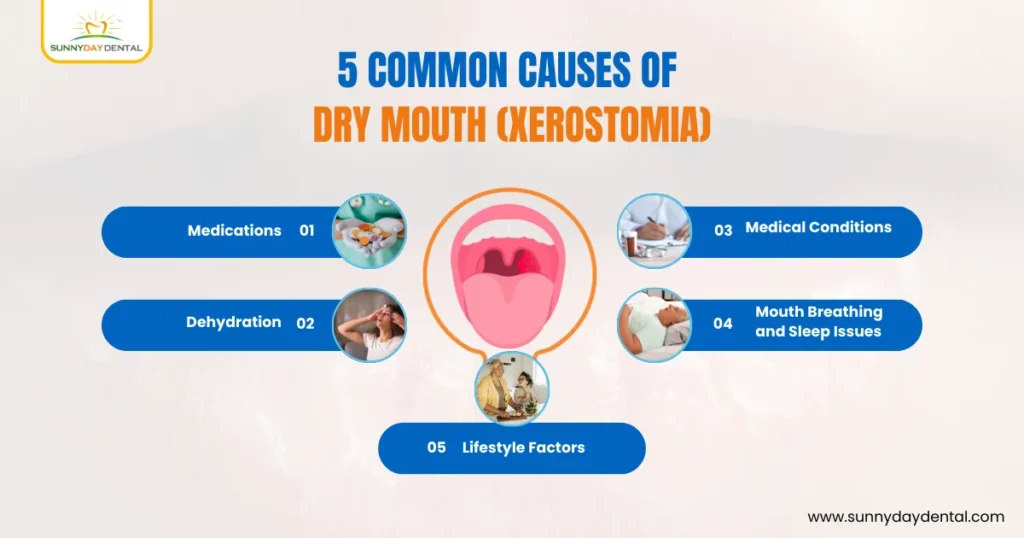
Understanding the cause of dry mouth is key to choosing the right treatment. In many cases, more than one factor is involved.
1. Medications
One of the most common causes of dry mouth is medication. Hundreds of commonly prescribed drugs list dry mouth as a side effect, including:
- Blood pressure medications
- Antidepressants and anti-anxiety drugs
- Allergy and cold medications
- Pain relievers
If dryness started after beginning a new medication, it’s worth discussing with your healthcare provider.
2. Dehydration
Not drinking enough water, excessive caffeine intake, or frequent alcohol consumption can reduce saliva production. Dehydration-related dry mouth often worsens during sleep or long workdays.
3. Medical Conditions
Certain health conditions are closely linked to dry mouth, such as:
- Diabetes
- Sjögren’s syndrome
- Thyroid disorders
- Autoimmune diseases
In these cases, dry mouth is often a long-term condition that needs ongoing management.
4. Mouth Breathing and Sleep Issues
People who breathe through their mouth, especially at night, often wake up with severe dry mouth. Snoring and sleep apnea can make this worse.
5. Lifestyle Factors
Smoking and vaping significantly reduce saliva flow and irritate oral tissues. Over time, this makes dry mouth more severe and harder to manage.
Why Dry Mouth Should Not Be Ignored
Saliva is your mouth’s natural defense system. When it’s missing, problems develop faster.
Untreated dry mouth can lead to:
- Rapid tooth decay
- Gum disease
- Oral infections
- Difficulty wearing dentures
- Poor taste sensation
This is why dentists take dry mouth seriously, even if it seems minor at first.
Dry Mouth Relief: 4 Home Remedies that Actually Help?
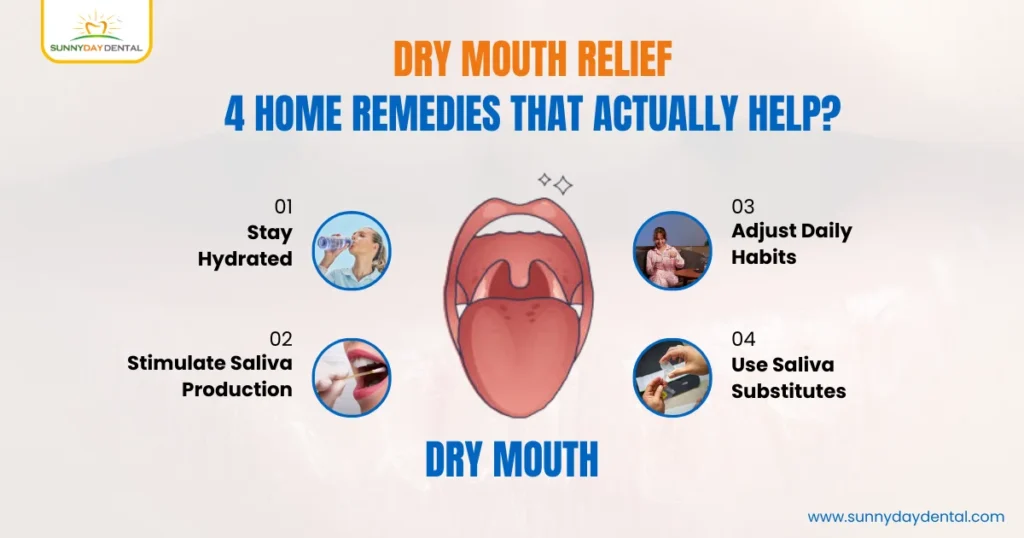
Finding effective dry mouth relief depends on the cause, but several strategies help most people.
1. Stay Hydrated
Sip water throughout the day instead of drinking large amounts at once. Avoid sugary or acidic drinks, which can worsen dryness.
2. Stimulate Saliva Production
Sugar-free gum or lozenges can help stimulate saliva. Products containing xylitol are especially helpful and tooth-friendly.
3. Adjust Daily Habits
Limit caffeine and alcohol, especially in the evening. Avoid tobacco in all forms, as it significantly worsens dry mouth symptoms.
4. Use Saliva Substitutes
Over-the-counter saliva sprays, gels, and rinses can provide temporary dry mouth relief, especially at night.
Best Treatment for Dry Mouth at the Dental Level
Home remedies help, but professional care is often necessary to manage dry mouth effectively.
The best treatment for dry mouth usually involves:
- Identifying the root cause
- Protecting teeth from decay
- Managing symptoms long-term
A dentist may recommend:
- Prescription-strength fluoride treatments
- Custom oral care routines
- Specialized mouth rinses
- Monitoring for cavities and gum disease
This preventive approach is critical because dry mouth increases dental risk even when oral hygiene is good.
When to See a Dentist for Dry Mouth

You should visit a dentist if:
- Dry mouth lasts longer than a few weeks
- You’re getting cavities more frequently
- Your mouth feels sore or burns
- You struggle to eat or speak comfortably
A Dentist in Woodbridge can evaluate saliva flow, review medications, and create a personalized treatment plan to protect your oral health.
How Dry Mouth is Diagnosed
Diagnosis usually starts with a conversation. Your dentist will ask about symptoms, medications, and medical history. In some cases, saliva flow tests or referrals to a physician may be recommended.
The goal isn’t just to confirm dry mouth, but to understand why it’s happening.
Preventing Dental Damage Caused by Dry Mouth
Even if dry mouth cannot be fully cured, dental damage can often be prevented.
Key steps include:
- Regular dental checkups
- Professional cleanings
- Fluoride use
- Careful monitoring of gum health
Early intervention makes a significant difference in long-term outcomes.
Find the Right Treatment for Dry Mouth

Dry mouth is common, but it’s not something you should simply live with. Whether it’s caused by medication, dehydration, or an underlying condition, dry mouth affects more than comfort, it affects your oral health.
If you’ve been wondering why is my mouth always dry, getting answers early helps prevent bigger problems later. With the right guidance, effective dry mouth relief and the best treatment for dry mouth are absolutely possible.
If symptoms persist, consulting a trusted Dentist in Woodbridge at Sunny Day Dental can help protect your teeth, improve comfort, and restore balance to your oral health.
Your mouth deserves moisture, comfort, and care, every single day.
FAQs About Dry Mouth (Xerostomia)
1. Why is my mouth always dry even when I drink plenty of water?
Drinking water helps, but persistent dry mouth is often caused by reduced saliva production, not just dehydration. Medications, medical conditions like diabetes or Sjögren’s syndrome, mouth breathing, and stress can all reduce saliva flow even if you stay well hydrated.
2. Is dry mouth a side effect of medications?
Yes. This is one of the most common causes of dry mouth. Many medications for blood pressure, anxiety, depression, allergies, and pain list dry mouth as a side effect. If dryness started after a new medication, speak to your doctor or dentist rather than stopping it on your own.
3. Can dry mouth cause cavities even if I brush well?
Yes. Saliva protects teeth by neutralizing acids and washing away bacteria. When saliva is reduced, cavities can develop quickly, even with good brushing habits. This is why people with dry mouth often need additional dental protection like fluoride treatments.
4. Is dry mouth worse at night or in the morning?
For many people, dry mouth feels worse at night and upon waking. This is often due to reduced saliva production during sleep, mouth breathing, snoring, or sleep apnea. Using saliva substitutes and addressing breathing patterns can help.
5. Does dry mouth cause bad breath?
Yes. Dry mouth is a common cause of chronic bad breath. Without enough saliva, bacteria build up more easily in the mouth. Treating dry mouth often improves breath significantly.
6. What is the fastest dry mouth relief?
Quick dry mouth relief can come from sipping water, chewing sugar-free gum, or using saliva sprays or gels. These provide temporary comfort, but long-term relief depends on treating the underlying cause.
7. Is dry mouth a sign of diabetes?
It can be. Dry mouth is a common symptom of uncontrolled or undiagnosed diabetes. If dry mouth is accompanied by frequent thirst, urination, or fatigue, medical evaluation is important.
8. Can dry mouth be cured permanently?
Sometimes, depending on the cause. If dry mouth is due to dehydration or lifestyle factors, it may be reversible. If it’s related to medications or medical conditions, it may need ongoing management rather than a permanent cure.
9. What is the best treatment for dry mouth recommended by dentists?
The best treatment for dry mouth usually involves a combination of approaches. Identifying the cause, protecting teeth with fluoride, using saliva-stimulating products, and maintaining regular dental visits are key parts of long-term management.
9. Should I see a dentist or a doctor for dry mouth?
Both may be involved. A dentist focuses on protecting teeth, gums, and oral tissues, while a doctor may evaluate underlying medical causes. Starting with a dentist is often helpful, especially if dental problems are already developing.
10. When should I worry about dry mouth?
You should seek care if dry mouth lasts more than a few weeks, causes pain or burning, leads to frequent cavities, or interferes with eating or speaking. Persistent dry mouth is not normal and should be evaluated.
11. How can a dentist in Woodbridge help with dry mouth?
A Dentist in Woodbridge can assess saliva flow, review medications, protect teeth with preventive treatments, and create a personalized plan for dry mouth relief. Regular monitoring helps prevent serious dental complications.