
Cavities in children are one of the most common chronic health issues worldwide, yet they are largely preventable. As a dentist, I see firsthand how early habits, diet choices, and awareness levels shape a child’s oral health for life. Understanding why tooth decay in children occurs and how to stop it early can save your child from pain, infections, and costly treatments later.
This guide is designed to give parents clear, practical, and research-backed strategies to prevent child tooth decay while building lifelong healthy habits.
What Are Cavities in Children?

Cavities in children are permanently damaged areas in the teeth that develop into small holes due to bacterial activity. These bacteria feed on sugars and produce acids that erode tooth enamel.
Tooth decay in children can begin as early as infancy, especially when proper oral hygiene is not followed. Over time, untreated decay can affect eating, speaking, and even a child’s confidence.
5 Reasons That Cause Cavities in Children
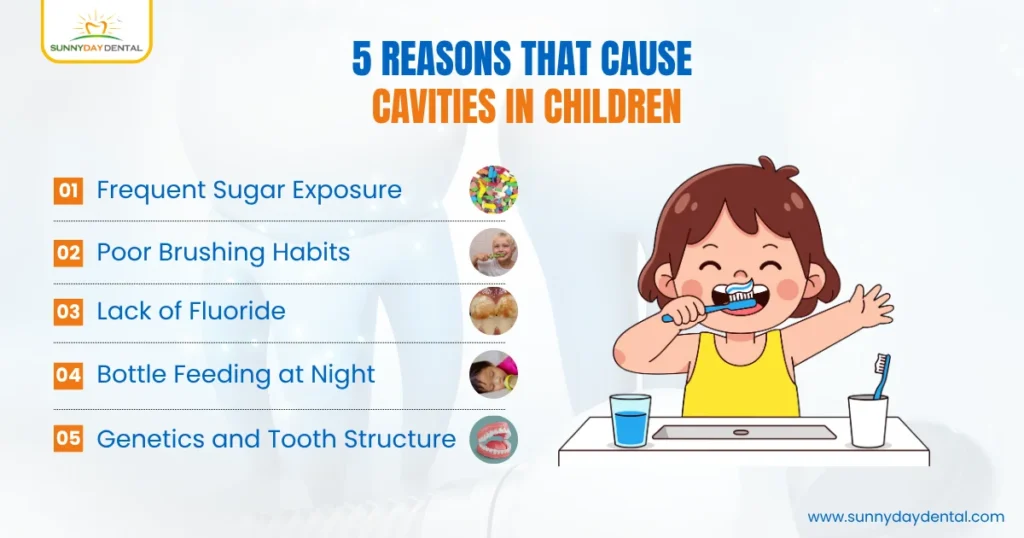
Understanding the root causes is the first step toward prevention.
1. Frequent Sugar Exposure
Sugary snacks, juices, and sticky foods create an ideal environment for bacteria. Child tooth decay often accelerates when children snack frequently without cleaning their teeth.
2. Poor Brushing Habits
Many children either do not brush properly or skip brushing entirely. Plaque buildup leads directly to tooth decay in children.
3. Lack of Fluoride
Fluoride strengthens enamel and makes teeth resistant to acid attacks. Without it, cavities in children develop faster.
4. Bottle Feeding at Night
Milk or juice left on teeth overnight can lead to early childhood decay, a severe form of tooth decay in children.
5. Genetics and Tooth Structure
Some children naturally have weaker enamel or deep grooves in their teeth, making them more prone to cavities.
Together, these factors create the perfect conditions for cavities in children to develop, making early prevention and consistent oral care essential for protecting your child’s long-term dental health.
5 Early Signs for Cavities in Children Parents Should Never Ignore
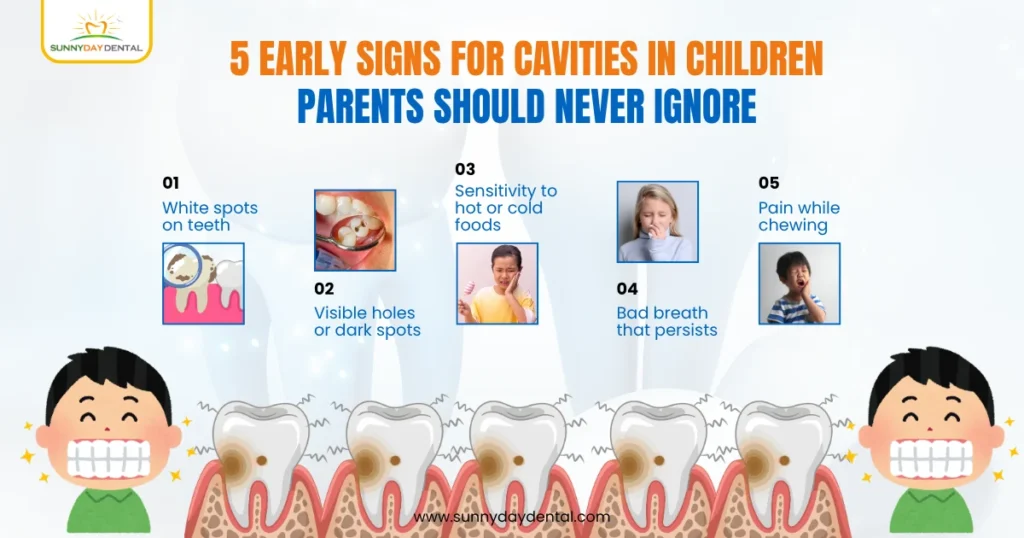
Recognizing early symptoms can prevent serious dental issues.
- White spots on teeth
- Sensitivity to hot or cold foods
- Pain while chewing
- Visible holes or dark spots
- Bad breath that persists
Ignoring these signs allows child tooth decay to progress deeper into the tooth.
How Cavities in Children Progress
Cavities do not appear overnight. They follow a gradual process:
- Plaque buildup begins
- Acid attacks enamel
- Enamel weakens and forms small lesions
- Decay reaches dentin
- Infection may reach the pulp
At advanced stages, treatment becomes more invasive and costly.
5 Daily Habits That Prevent Cavities in Children
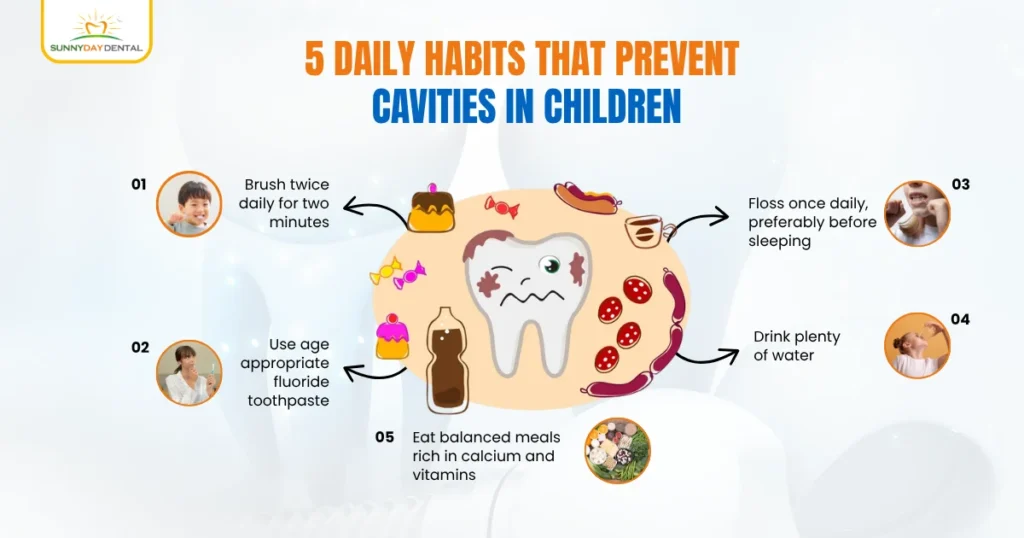
Good habits create long-term protection. The following practices are essential.
Key Daily Habits
- Brush twice daily for two minutes
- Use age-appropriate fluoride toothpaste
- Floss once daily, preferably before sleeping
- Drink plenty of water
- Eat balanced meals rich in calcium and vitamins
When these habits are consistent, cavities in children become far less likely.
Why Consistency in Maintaining Oral Health Matters
Even the best dental products cannot compensate for irregular habits. Preventing tooth decay in children is about routine, not occasional effort.
The Role of Diet in Preventing Tooth Decay in Children
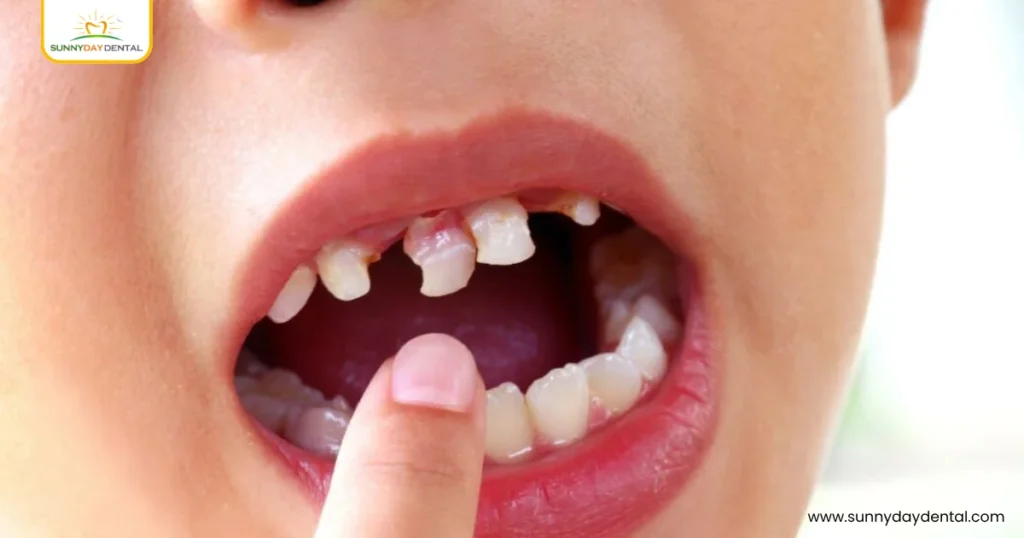
Diet plays a critical role in oral health.
Foods That Increase Risk
- Candy and Chocolates
- Sugary Drinks and Juices
- Sticky Snacks Like Toffee
- Refined Carbohydrates
These foods feed bacteria responsible for child tooth decay.
Foods That Protect Teeth
- Cheese and Yogurt
- Leafy Greens
- Nuts and Seeds
- Crunchy Fruits like Apples
A balanced diet helps strengthen enamel and reduce cavities in children.
Dental Sealants for Children: A Powerful Preventive Tool
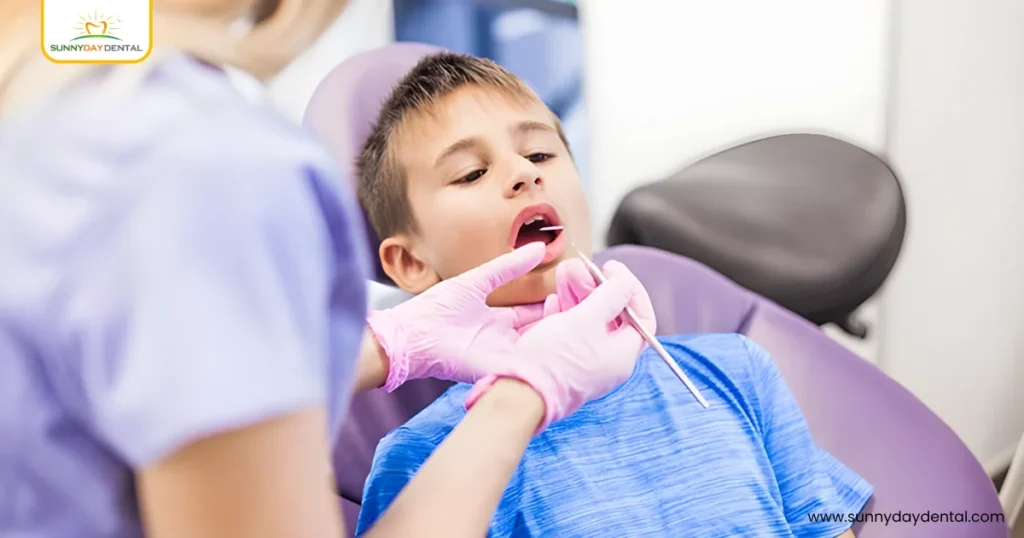
Dental sealants for children are thin protective coatings applied to the chewing surfaces of molars. These areas are most prone to cavities in children because of their deep grooves.
Benefits of Dental Sealants
- Prevent up to 80% of cavities
- Protect hard-to-clean areas
- Painless and quick procedure
- Long-lasting protection
Many pediatric dentists strongly recommend dental sealants for children as part of a preventive care plan.
When Should Children Get Sealants
Typically, sealants are applied when permanent molars erupt, usually between ages 6 and 12. Early application can significantly reduce tooth decay in children.
Why Regular Dental Visits Matter
Routine dental checkups are essential for early detection and prevention.
A pediatric dentist for cavities can identify early signs that parents may miss. Professional cleanings remove plaque buildup that regular brushing cannot.
Clinics offering Pediatric Dentistry in Woodbridge emphasize preventive care, education, and child-friendly treatment approaches. Choosing the right provider ensures your child feels comfortable and receives appropriate care.
Choosing the Right Pediatric Dentist

Selecting a pediatric dentist for cavities is not just about treatment; it is also about building trust and comfort.
What to Look For
- Experience in treating children
- Friendly and calming environment
- Preventive-focused approach
- Clear communication with parents
Clinics specializing in pediatric dentistry in Woodbridge often provide tailored care plans designed specifically for children’s needs.
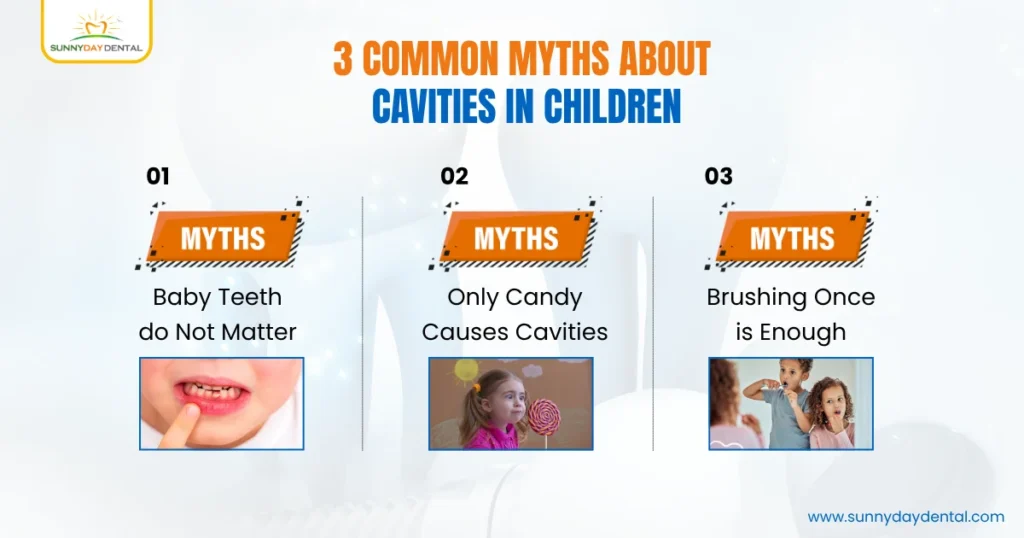
3 Common Myths About Cavities in Children
Many parents unknowingly rely on outdated or incorrect information.
Myth 1: Baby teeth do not matter
In reality, untreated cavities in children can affect permanent teeth.
Myth 2: Only candy causes cavities
Reality, even bread and juices contribute to tooth decay in children.
Myth 3: Brushing once is enough
Reality, twice-daily brushing is essential to prevent child tooth decay.
Advanced Preventive Strategies in 2026
Modern dentistry offers several advancements to combat cavities in children.
- Fluoride varnish treatments
- Digital cavity detection tools
- Minimally invasive fillings
- Preventive counseling programs
Clinics practicing Pediatric Dentistry in Woodbridge often incorporate these advanced techniques to enhance outcomes.
Long-Term Impact of Ignoring Cavities
Untreated cavities in children can lead to:
- Severe tooth pain
- Infections and abscesses
- Difficulty eating and speaking
- Poor academic performance due to discomfort
- Misalignment of permanent teeth
Early prevention is always simpler than treatment.
Protect Your Child from Cavities with Sunny Day Dental
If you are concerned about cavities in children or want to create a strong preventive care plan, Sunny Day Dental in Woodbridge, Canada provides expert, child-focused dental care. Their experienced team specializes in Pediatric Dentistry in Woodbridge, offering services like dental sealants for children and early intervention by a trusted pediatric dentist for cavities.
Take the first step toward protecting your child’s smile. Book an appointment today at Sunny Day Dental and ensure your child grows up free from cavities in children with the right care and guidance.
FAQs on Cavities in Children
Q1. At what age should I start brushing my child’s teeth?
You should begin cleaning your child’s gums even before teeth appear, using a soft cloth. Once teeth erupt, use a small toothbrush and a tiny amount of toothpaste.
Q2. Are flavored toothpastes safe for kids?
Yes, as long as they contain fluoride and are used in the correct amount. Supervise brushing to ensure your child does not swallow toothpaste.
Q3. How often should children replace their toothbrush?
Every three months or sooner if the bristles are frayed. A worn toothbrush is less effective at cleaning.
Q4. Can cavities heal on their own?
Early-stage damage can sometimes be reversed with fluoride and good hygiene, but formed cavities require professional treatment.
Q5. Is mouthwash necessary for children?
Mouthwash is not essential for younger children. It may be recommended for older kids depending on their oral health needs. Always consult a dentist first.