

Many parents feel reassured when they see a baby self-soothing by sucking their thumb or using a pacifier. These behaviors are completely natural in early infancy. In fact, sucking is one of the earliest reflexes babies develop, helping them feel secure and calm.
However, when thumb sucking continues beyond the early childhood years, it can start affecting the development of the mouth, jaw, and teeth alignment. While occasional habits are harmless in babies, persistent habits during toddlerhood and early school years may lead to orthodontic issues.
Understanding when these habits are normal and when they can become harmful is essential for parents. This guide explains the science behind thumb sucking, the possible dental complications, and how families can gently help children break the habit while protecting their oral health.
Why Babies Naturally Suck Their Thumb
Many parents worry when they notice a newborn sucking a thumb, but in reality, this behavior begins even before birth. Ultrasound images often show babies sucking their thumbs inside the womb.
The sucking reflex plays several important roles in early development.
• It provides comfort and security
• It helps babies fall asleep more easily
• It supports feeding coordination
• It reduces stress and anxiety in infants
Because of these benefits, both newborn sucking thumb and pacifier use are considered normal during the first few years of life.
Most children naturally stop sucking behaviors between ages of 2 and 4. During this stage, the jaw and teeth are still developing, so occasional sucking typically does not cause permanent damage.
However, if thumb sucking continues after permanent teeth begin erupting, dental complications can arise.
Thumb Sucking vs Pacifier Use
Both habits involve sucking motions, but their dental effects can differ depending on intensity, frequency, and duration.
1. Thumb Sucking

When a child practices thumb sucking, the thumb exerts pressure on the upper teeth and palate. Because the thumb is always available, children may develop a more persistent habit.
Long term thumb sucking may influence:
- Upper jaw narrowing
- Forward movement of front teeth
- Bite alignment problems
2. Pacifier Use

Pacifiers can also lead to pacifier teeth problems if used excessively or beyond early childhood. However, they have one advantage over thumbs, they can be removed or controlled by parents.
Some children who use pacifiers heavily may experience pacifier teeth problems such as:
- Open bite
- Changes in tooth alignment
- Altered palate shape
Research from pediatric dental associations suggests limiting pacifier use after age 2 to reduce pacifier teeth problems and promote natural dental development.
How Thumb Sucking Affects Dental Development
Children’s jaws and teeth are highly adaptable during early growth. Repeated pressure from thumb sucking can influence the shape of the mouth and the position of developing teeth.
The severity of dental changes depends on three factors.
1. Frequency
How often the child sucks their thumb.
2. Intensity
How strongly the thumb presses against teeth.
3. Duration
How long the habit continues during childhood.
If thumb sucking continues past ages 4 to 5, several dental concerns may appear.
Common Dental Effects
• Open bite, where upper and lower front teeth do not meet
• Overbite caused by forward movement of upper teeth
• Narrow palate development
• Speech articulation issues
• Increased likelihood of needing orthodontic treatment
Children with persistent habits may eventually require orthodontic treatment to correct bite alignment and restore normal jaw development.
This is why early dental monitoring is recommended by experts in pediatric dentistry in Woodbridge and other regions.
5 Signs the Thumbsucking Habit May Be Affecting Your Child’s Teeth
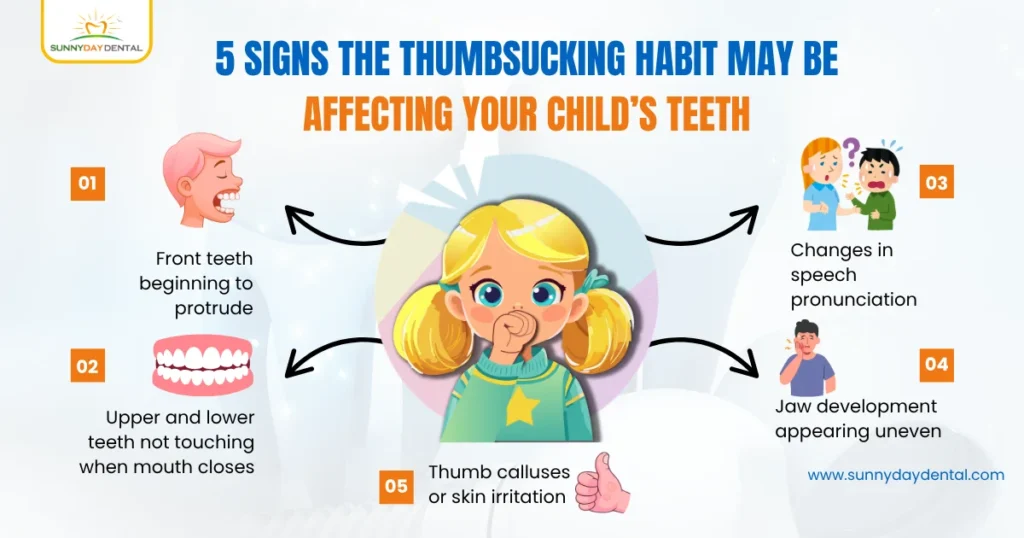
Parents often wonder when a sucking habit becomes a concern. Early detection can prevent long term dental problems.
Watch for these warning signs.
- Front teeth beginning to protrude
- Upper and lower teeth not touching when mouth closes
- Changes in speech pronunciation
- Jaw development appearing uneven
- Thumb calluses or skin irritation
If these signs appear, visiting a pediatric dentist for kids can help evaluate whether intervention is needed.
Early guidance from professionals specializing in pediatric dentistry in Woodbridge can prevent more complex dental problems later.
How to Help Your Child Quit Thumb Sucking
Breaking habits requires patience and encouragement rather than punishment. Children often use sucking behaviors for comfort, so emotional support is essential.
Parents should focus on gentle strategies that motivate children to quit sucking thumb naturally.
Positive and Supportive Techniques
Before exploring techniques, it is important to understand that children rarely stop habits overnight. The goal is gradual progress while maintaining a positive environment.
Here are effective methods recommended by pediatric dentists.
• Praise your child for not sucking their thumb
• Identify situations that trigger the habit such as bedtime or stress
• Offer comforting alternatives like stuffed toys
• Use reminder tools like bandages or gloves at night
• Create reward charts for habit free days
• Talk openly about growing up and caring for teeth
These approaches help children feel supported while working toward the goal to quit sucking thumb.
If home strategies are not effective, a pediatric dentist for kids can recommend dental appliances that help children quit sucking thumb safely.
Professional guidance ensures the process is gentle and child friendly.
When Should Parents Be Concerned
Most children naturally stop sucking habits before their adult teeth erupt. However, if thumb sucking continues after age 5, parents should consult a dental professional.
Early dental visits help determine whether intervention is needed.
Specialists in pediatric dentistry in Woodbridge often monitor jaw growth and bite alignment during routine checkups. These assessments help identify early orthodontic concerns.
If necessary, dentists may recommend habit breaking appliances or preventive strategies that reduce the need for extensive orthodontic treatment later.
Early intervention can significantly reduce the likelihood of complicated orthodontic treatment during teenage years.
The Role of Pediatric Dentists

Children’s dental needs differ from adult care. Specialists trained as a pediatric dentist for kids understand the behavioral, developmental, and emotional aspects of treating young patients.
A pediatric dentist for kids focuses on:
• Monitoring oral development
• Preventing dental problems early
• Guiding parents on habits like thumb sucking
• Creating positive dental experiences for children
Regular visits to clinics that specialize in pediatric dentistry in Woodbridge ensure children receive age appropriate preventive care.
These visits also allow dentists to monitor habits like thumb sucking before they lead to long term dental complications.
Long Term Outlook for Children
The good news is that most dental effects from sucking habits can improve once the habit stops.
When children successfully quit sucking thumb before their permanent teeth fully develop, the mouth often corrects itself naturally.
However, if the habit continues into later childhood, orthodontic correction may be necessary.
Dentists may recommend braces or other orthodontic treatment options to restore proper alignment.
Preventive care and early intervention remain the most effective strategies to protect children’s smiles.
Why Early Dental Guidance Matters
Parents often underestimate the impact of childhood habits on oral development. Even simple behaviors like thumb sucking can influence jaw growth, speech development, and tooth alignment.
Working with professionals who specialize in pediatric dentistry in Woodbridge allows families to:
• Detect dental problems early
• Prevent long term bite issues
• Guide children toward healthy habits
• Reduce the need for complex orthodontic treatment
Early dental education empowers families to support healthy smiles for life.
Stop Thumb Sucking Early with Expert Care at Sunny Day Dental

If your child is struggling with persistent thumb sucking or showing signs of dental alignment changes, professional guidance can make a big difference.
At Sunny Day Dental, our experienced team specializes in Pediatric Dentistry in Woodbridge and understands how to support children and parents through healthy habit transitions. Our friendly team provides expert care from early checkups to preventive monitoring, ensuring your child’s smile develops properly.
Whether your child needs guidance to quit sucking thumb, help addressing pacifier teeth problems, or early evaluation for orthodontic treatment, our compassionate team is here to help.
Visit Sunny Day Dental today to schedule an appointment and give your child the healthy, confident smile they deserve.
FAQs About Thumb Sucking
1. At what age should children stop using pacifiers?
Most pediatric dentists recommend stopping pacifier use between ages 2 and 3. At this stage, prolonged sucking habits can begin influencing jaw and tooth development.
2. Can thumb sucking affect speech development?
Yes, prolonged sucking habits can alter tongue placement and palate shape, which may affect pronunciation of certain sounds. Speech therapists and dentists sometimes work together to address this issue.
3. Are some children more likely to develop sucking habits?
Children who rely heavily on self soothing behaviors, experience anxiety, or have strong sucking reflexes during infancy may be more likely to continue these habits longer.
4. Do habit breaking dental appliances hurt children?
Most appliances used by dentists are gentle and comfortable. They are designed to remind children not to place their thumb in the mouth rather than causing discomfort.
5. Can thumb sucking cause jaw growth problems?
Yes, persistent pressure from sucking habits can influence how the upper jaw and palate grow. Early dental monitoring helps prevent long term structural issues.